
Hollywood Bathroom Remodeling Hollywood and nearby cities
Bathroom Lighting Color Temperature and Color Rendering
The color of your bathroom light changes how skin, tile and paint look every morning. This guide explains warm and cool light, color rendering at the mirror and how to avoid shadows on the face.
 Hollywood Bathroom Remodeling
Warm design. Clear planning.
Light color guide
What color temperature actually means
Color temperature describes how warm or cool a white light looks. It is measured in a unit called Kelvin, and a lower number leans toward the amber glow of a candle or an old incandescent bulb, while a higher number leans toward the blue white of an overcast sky. Nothing about it is a measure of brightness, which is a separate quality altogether.
Most people feel the difference before they can name it. A warm light makes a room feel relaxed and flatters wood, brass and warm paint. A cool light feels crisp and clean, and it makes white tile look whiter but can make skin look pale or gray. Neither is wrong, but each suits a different purpose.
In a bathroom, you ask the light to do two jobs at once. It has to make the room feel comfortable, and it has to let you see your face and your clothes accurately. Those goals pull in slightly different directions, which is why the color choice deserves some thought rather than being left to whatever bulb comes in the box.
The good news is that modern fixtures give a lot of control. Many can be ordered in a specific color, some allow the color to be adjusted, and nearly all can be dimmed. The rest of this guide shows how to use those controls without getting lost in technical jargon.
Warm light, cool light and the middle ground
Warm white light suits bathrooms where relaxation matters: a soaking tub, a guest suite, a powder room with candle style sconces. It softens hard tile edges and brings out the richness of stone and wood. Under warm light, a cream wall looks inviting and a brushed brass faucet glows rather than glares.
Cool or daylight white suits spaces where tasks come first, such as a kids bathroom or a laundry style utility bath. It reads as clean and bright, and it can help with tasks that need detail. The risk is that it can feel clinical in a room meant for unwinding, and it can clash with warm materials.
The middle ground, often called neutral white, is what many homeowners end up choosing for the main light at the mirror. It is close enough to daylight to show true color, yet soft enough to avoid the sterile feel. If you are unsure, neutral white with the option to dim is a safe starting point.
Whichever you choose, keep the color consistent within a room. Mixing a warm ceiling light with a cool mirror light creates an uneven glow that looks accidental. Ask the supplier for the same color across all fixtures, and check that bulbs from different brands match before you finalize.
Color rendering and why it matters at the mirror
Color rendering describes how faithfully a light shows the true color of objects. A light with poor rendering can make a red lipstick look orange or a navy shirt look black. Manufacturers describe this with a color rendering index, and in general a higher value means more accurate color.
For a bathroom mirror, accuracy is the real prize. Choosing a light with strong color rendering means the makeup you apply, the shirt you choose and the skin tone you see all look the same in the bedroom as they do in the bathroom. This is why a lamp that seems perfectly bright can still leave you surprised when you step outside.
Color rendering and color temperature are separate qualities. You can have a warm light with excellent rendering or a cool one with poor rendering. When you shop, look for both pieces of information, and ask the supplier to show you samples near a mirror rather than only in a catalog photo.
Tile, paint and countertop colors are affected too. A stone with warm veining may look flat under a poorly rendering light, and a glossy tile may show an odd tint. Bring a sample board when you test, and look at it under the actual bulb you plan to use before you commit to the finishes.
Avoiding shadows on the face
Shadows under the eyes, nose and chin are the most common lighting complaint at a bathroom mirror. They happen when light comes only from above, like a single fixture over the mirror or a recessed light in the center of the ceiling. The brow casts a shadow downward and the face looks tired.
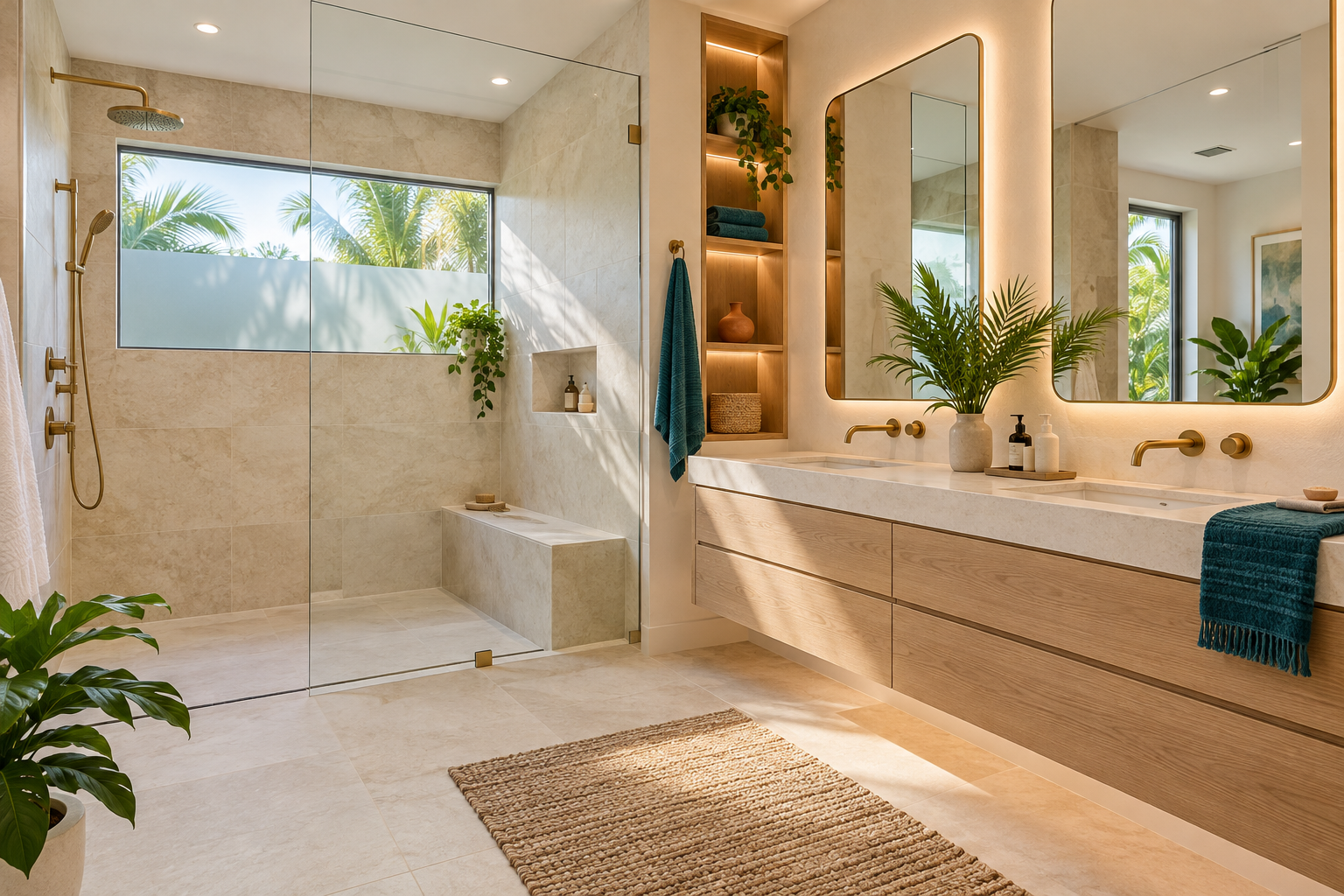
The cure is to light the face from the sides, at about eye level, or to use a long fixture that spreads light across the whole width of the mirror. Sconces on either side of the mirror, or a mirror with built in edge lighting, fill shadows from both directions. Our companion guide on mirror and lighting pairings shows how the mirror and its light work as one unit.
Vertical placement matters. Fixtures that sit too low glare into the eyes, and ones that sit too high reintroduce shadows. A good arrangement puts the light source near the face, shielded or diffused, so the glow looks soft and even.
Reflective surfaces help too. A light colored vanity top and walls bounce some of the light upward into the face, reducing shadows further. Dark surfaces absorb it, so a dark counter may call for a bit more light at the mirror.
- Place light on both sides of the mirror rather than only above it.
- Use diffused or shielded fixtures to avoid glare in the eyes.
- Keep light color the same across all fixtures at the mirror.
- Pair a light with strong color rendering with the vanity area.
- Test the arrangement with a sample before the electrical work is set.
Layers of light and where each color belongs
A comfortable bathroom uses more than one source. General light fills the room, task light serves the mirror, accent light highlights a niche or a feature wall, and sealed wet area light handles the shower. Each layer can have its own character. Our guide on bathroom lighting layers describes how they work together.
In practice, the task light at the mirror should have the strongest color rendering and a neutral to slightly warm tone. The general light can lean a little warmer for comfort. Accent lighting inside a niche is often warmer still, because it is meant to glow rather than reveal.
Inside the shower, a sealed fixture should be one made for wet areas, and it benefits from a soft, steady light. Avoid a harsh cool beam, which can make the space feel like a locker room. A dimmable choice lets you lower the brightness for relaxing.
A night light layer is worth planning. A low, warm glow at floor level or under the vanity lets you move through the bathroom at night without switching on the bright lights and waking yourself up. It also feels kinder to the eyes, which is a small luxury that people appreciate.
Think also about the ceiling. Recessed fixtures are popular, but a ring of them directly over the head can create the same shadows as a single overhead lamp. Spacing them toward the walls and the shower, rather than centered on the room, gives a more even spread. If the ceiling has a soffit or a change of height, the guide to bathroom ceilings and soffits explains how those features affect where fixtures can go.
Dimmers, controls and changing moods
Dimmers are the easiest way to make one light color serve several moods. A bright setting for morning grooming, a soft one for an evening bath and a low one for the middle of the night make the same fixtures useful at every hour. You will find more about this in bathroom lighting controls.
Not every light works with every dimmer. The fixture, the bulb and the switch all need to be compatible, or the light can flicker or buzz. Ask your electrician and supplier to confirm the match, and choose a dimmer designed for the kind of light source you are using.
Some systems let you change not just the brightness but the color, shifting from warm to cooler during the day. These can be appealing, but they add cost and complexity, so decide whether you would actually use the feature. For many bathrooms a simple dimmer on well chosen warm to neutral fixtures does the job.
Switch placement matters as much as the switch type. Place the main controls just inside the door, and put the night light on its own control or a sensor. Because switch positions are set before walls are closed, discuss them early in planning.
Pairing light with tile, paint and finishes
Light changes every surface it touches. A glossy white tile that looks crisp under cool light may look slightly yellow under warm light. A matte stone tile with warm veining looks richer under a warm source. Before you finalize finishes, view them under the light color you intend to install.
Paint is especially sensitive. A soft gray can look bluish under cool light and greenish under some warm bulbs. Test samples on the wall, near the mirror, at different times of day. Our notes on bathroom color palettes can help you narrow the field before testing.
Metal finishes react as well. Polished chrome picks up the tint of the light around it, while brass and bronze can look glowing or muddy depending on the source. Matching finish to light helps the overall effect feel deliberate. If you are still choosing metals, bathroom faucet finishes compares common tones and how they age in a humid room.
Glossy surfaces reflect bulbs as bright points, so consider how fixtures will appear in shower glass, polished tile and mirrors. Frosted or diffused covers calm those reflections and keep the room comfortable.
Florida light, windows and the time of day
South Florida has strong daylight, and a bathroom with a window sees dramatic shifts between morning and afternoon. Electric light that matches the daylight color can feel natural, while one that is far from it can look off, especially at the mirror in the middle of the day.
If your bathroom has a window, think about how it interacts with the fixtures. A window behind you can leave your face in shadow, so the mirror light must fill in. A window beside the mirror can give wonderful soft light but needs privacy glass or a treatment for neighbors. See the ideas in natural light and windows.
Humidity affects fixtures too. Lights near the shower should be suitable for damp or wet locations, and the manufacturer or an electrician can tell you which fixture type is appropriate. These are code and safety matters that vary, so ask your city building department and a qualified electrician rather than guessing.
Salt air near the coast can affect exposed metal finishes, so ask the supplier about finishes that tolerate a coastal climate. A fixture that looks perfect in a showroom may dull in a bathroom that sits near the water.
Hurricane season adds another practical point. Power can go out for long stretches, and a bathroom is often the room you want to reach safely in the dark. A plug in night light or a battery lantern kept in a drawer is a simple habit, and it is worth mentioning when you discuss the lighting plan. Ask your remodeler how the plan can leave room for these small helpers.
How to test before you commit
The most reliable test is a physical one. Ask the supplier for a sample bulb or fixture, install it temporarily where possible and look at your face, your tile and your paint at several times of day. A photo on a screen is not a substitute for light in your actual room.
Bring a few things with you: a swatch of the paint, a piece of the planned tile, a sample of the countertop and a small makeup item or fabric you rely on. Compare how they look under warm, neutral and cool options side by side.
Take notes on what you notice. Do you like how your skin looks? Does the tile look the way you expected? Does the room feel inviting or sterile? These impressions are the data you need. Share them with your planner so the electrical plan reflects what you saw.
If you plan a larger project, the lighting decisions connect to other work, so read bathroom lighting for the wider picture, and our bathroom electrical planning guide for the questions to raise with an electrician. It explains how fixture locations, switches and wiring are coordinated before construction begins.
Questions to take to your planning conversation
Plan the conversation around a few clear questions. What color will the main mirror light be? How well does it render color? Which fixtures will share the same color? Will they be dimmable? Where will the switches go? Is there a night light layer? Asking these early prevents surprises.
Bring photos of bathrooms you like and note whether the light felt warm or cool. A planner can translate your preferences into a fixture list and a layout. If your house is older or a condo, mention any limits you know about, such as ceiling height or shared walls.
Discuss any electrical changes with a qualified electrician and your city. Requirements for outlets, switches and fixtures in wet areas vary by city and building, so ask your city building department what applies to your project. This page is general guidance, not a code reference.
Finally, decide who will make the last call on color. In a shared bathroom, two people may prefer different tones, and a dimmable neutral light is a fair compromise. If your household includes older adults, brighter task light and clear contrast between floor, wall and fixtures can make movement easier, a point that connects to accessibility planning for bathrooms.
If your bathroom lighting feels wrong today, our page on poor bathroom lighting describes the common symptoms and what to tell a remodeler. Starting with what bothers you gives the planning conversation a clear direction.
Good to know
Common questions
What color temperature is good for a bathroom mirror?
A neutral white that is close to daylight, perhaps with a slight warmth, works for most people because it shows skin and makeup accurately while still feeling comfortable. Choose a light with strong color rendering as well, and keep every fixture at the mirror the same color so the glow is even.
Can I mix warm and cool bulbs in one bathroom?
It is better not to. Mixed colors create an uneven look and can make tile and paint appear to change from one corner to another. If you want variety, use dimmers and keep the color the same, or deliberately make accent lights a little warmer than the main light.
Why do I look tired in my bathroom mirror?
Usually the light comes only from above and casts shadows under the eyes, nose and chin. Adding light at the sides of the mirror, or using a fixture that spreads light across the width, fills in the shadows. Light colored surfaces nearby can also soften the effect.
Does color rendering matter more than color temperature?
They do different jobs. Temperature sets the warm or cool feel, while rendering decides how true colors look. At a mirror, good rendering is especially valuable for makeup, shaving and choosing clothes. Look for both qualities and test them with samples under the actual light.
Should the shower light match the mirror light?
Ideally it should be close in color so the room feels unified, though the shower fixture can be softer. It must be a fixture made for wet areas, and your electrician and city can tell you what applies. A dimmable option lets you lower the glow for relaxing.
Do dimmers change the color of the light?
Some bulbs shift warmer as they dim, and others keep the same color, depending on the light source. Ask the supplier how your chosen fixture behaves and confirm that the bulb, fixture and dimmer are compatible. Testing a sample in your room is the most reliable way to find out.
Your bathroom starts with a conversation