
Hollywood Bathroom Remodeling Hollywood and nearby cities
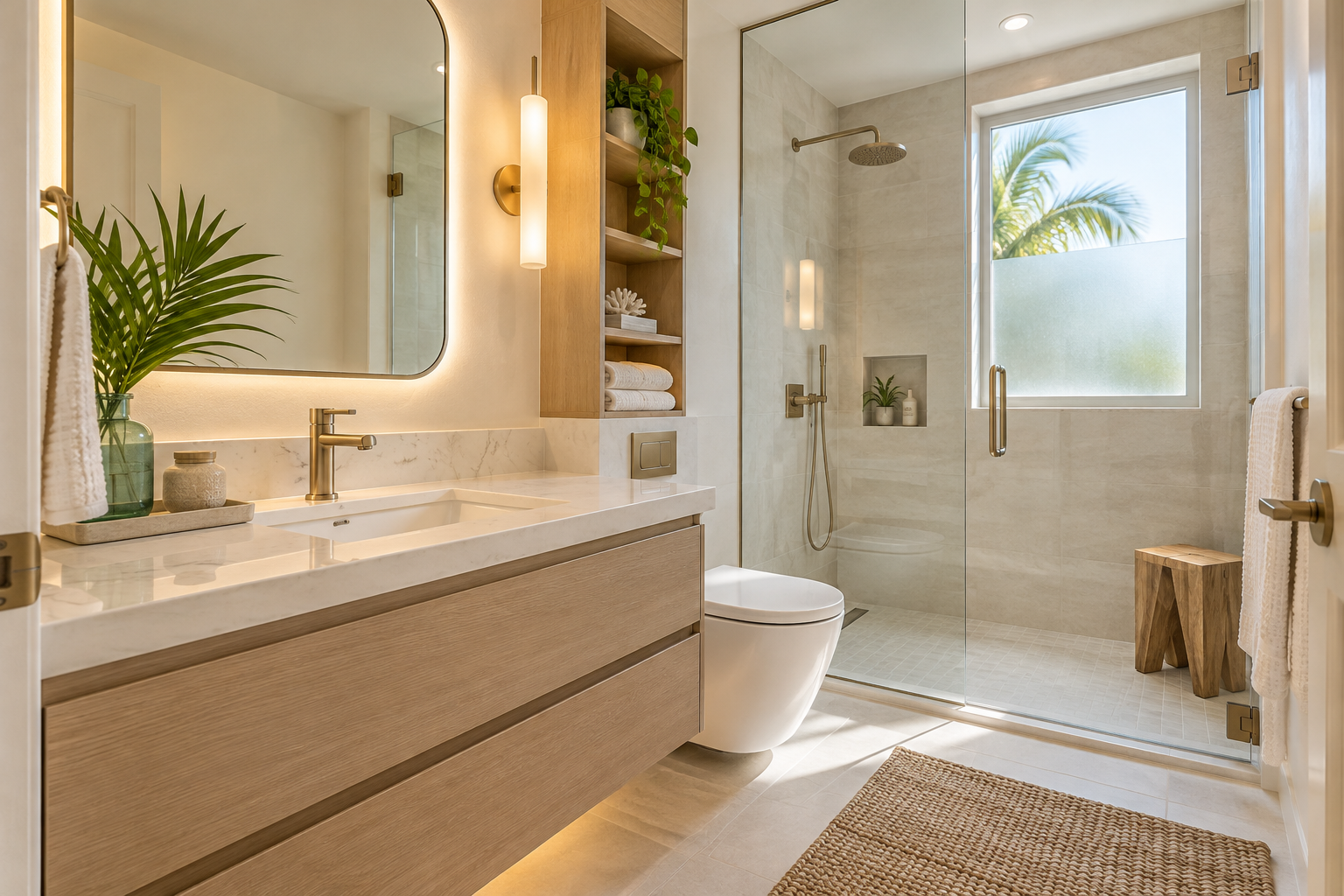
Natural Light and Bathroom Windows: Daylight Without Giving Up Privacy
Daylight makes a bathroom feel clean, larger and calmer. It also raises questions about privacy, moisture and storm season. Here is how windows, glass choices and light tubes can work in a bathroom.
 Hollywood Bathroom Remodeling
Warm design. Clear planning.
Daylight and privacy
Why daylight changes how a bathroom feels
A bathroom with good daylight feels different from one lit only by bulbs. Colors look truer, tile shows its real character and the whole room seems to breathe. Many people find that a morning wash of natural light makes an ordinary bathroom feel like a small retreat.
Daylight also changes through the day. A window on the east gives gentle warm light in the morning, while a west facing window may deliver strong light in the late afternoon. A window on the north gives steady, even light with little glare. Knowing which way your bathroom faces tells you what kind of light to expect.
Of course, a window in a bathroom brings trade offs. It admits heat and glare, it must protect privacy, and it sits in a room where steam and water are constant. Planning means weighing those factors honestly, so that the daylight you gain is worth what you give up.
A helpful first step is to stand in the bathroom at different hours and notice where the light falls. Does it reach the mirror, the shower floor, the corner by the toilet? Does it make the room feel warm or harsh? Taking a few photographs at morning, midday and evening gives you and your remodeler a shared picture to work from, and it often reveals that the room needs less or more light than you assumed.
The privacy question comes first
Most people will not enjoy a bathroom where the neighbors or passers by can see in. Privacy is the main reason that bathroom windows are small, high or covered. The question is how to keep daylight while giving up the view.
Several approaches work. Obscure glass, sometimes called frosted, textured or patterned glass, lets light through while blurring shapes. Windows placed high on the wall, above eye level from outside, admit light without a line of sight. Privacy film applied to existing glass is a flexible option for rooms that already have windows. Blinds, shades and shutters allow adjustment on demand.
Each choice has a different look. Obscure glass comes in many textures, from fine to heavily patterned, and each scatters light differently. We suggest holding a sample against your actual window, at the actual height, and looking at it from outside. Our guide on door and privacy options for bathrooms explores related choices.
Shades and blinds deserve a note of their own. Fabric and wood can swell, mildew or warp in a steamy room, so materials such as faux wood, aluminum, vinyl or treated fabric are common for bathrooms. Cordless operation is tidier and safer around children. Top down, bottom up shades let you cover the lower part of the window for privacy while keeping the upper part open to daylight.
- Obscure or textured glass blurs shapes while keeping light.
- High, narrow windows admit daylight above the line of sight.
- Privacy film can be applied to existing glass.
- Shades, blinds or shutters give control that changes through the day.
Window placement over a tub or in a shower
A window over a tub or inside a shower is a classic that raises special questions. Water splashes directly on the window, the frame, the sill and the surrounding wall. Frames and sills must be made of materials that tolerate constant moisture, and the sill should slope so water drains away instead of pooling.
In a shower, a window is often placed high on the wall, out of the direct spray, or set within a deep tiled recess. The tile wraps the opening, and the sill becomes part of the shower. The edges, corners and meeting points with the frame require careful waterproofing so water cannot slip behind the tile. Our waterproofing page explains why these junctions matter.
Some owners choose to keep the shower wall solid and put the window elsewhere. That is a legitimate decision that avoids a complicated detail. If you love the idea of daylight in the shower, discuss it early so that the plan considers the framing, the glass type and the tile layout together. Our page on custom showers shows how such details are planned.
Over a freestanding tub the picture changes again. A window behind or beside a tub can frame a pleasant view of the sky or a private garden, and it can make a bath feel special. The tub should not block access to the window for cleaning, and the wall behind it still needs protection from splashes. Our page on freestanding tubs covers positioning that suits such a window.
Glass types: obscure, tempered and laminated
Glass for a bathroom window is not all the same. Obscure glass is treated or textured to blur the view. Tempered glass is made stronger and breaks into small pieces. Laminated glass has a layer between two panes that holds it together if it breaks. Requirements for safety glazing near tubs and showers exist in many places, and they vary, so ask your city building department what applies to your window.
In hurricane country, glass choices also touch on storm protection. Some homes use impact resistant glass or shutters, and replacement windows may have different requirements depending on the building and community. We do not state rules here. Ask your city, your association and your insurer what they expect, and ask your window supplier for the product information.
Low emissivity coatings and tinted glass can reduce the heat and glare that enter a room. In a bathroom facing west, that may make the difference between a pleasant space and a hot one. Ask the window supplier what glass options exist for your exposure and how they affect the light.
Frame material is the other half of the window. Aluminum, vinyl, wood and fiberglass all behave differently in humid, salty air. Some resist corrosion well, some need regular painting and some can warp. Ask which frame materials the supplier recommends for a bathroom in your area, and how the frame is sealed to the wall, since that joint is where water most often finds its way in.
Operable or fixed: ventilation and storm season
A window that opens can help ventilate a bathroom when outdoor conditions allow. It does not replace an exhaust fan, especially in humid weather when the air outside is as damp as the air inside. A fixed window gives light without maintenance and without a place for air or water to leak.
Operable windows need hardware that resists humidity and salt air. Cranks, latches and tracks can corrode. In a bathroom, a casement with a crank or an awning window that opens from the bottom tends to suit a damp location, since it can shed water and be opened with wet hands. Sliding windows can collect moisture in their tracks.
During storm season, you will want to know how a window closes and protects the opening. Our hurricane season planning notes give general ideas for scheduling and protecting a project, and our page on ventilation and humidity explains why a fan is still essential.
Screens are worth a thought if you plan to open the window. A screen keeps out insects but can corrode in salt air and collect dust. Choose a frame and mesh made for the setting. Also consider how the window will be reached for opening and closing, especially if it is high above a tub, where reaching can be unsafe. A pole operator or a motorized opener can help in that case.
Solar tubes and skylights for rooms without walls to spare
Some bathrooms have no outside wall at all, or the outside wall faces a neighbor. A solar tube, sometimes called a light tube, captures daylight at the roof through a small dome and sends it down a reflective tube to a diffuser in the ceiling. It brings a surprising amount of daylight into a windowless room without a view.
A skylight is a larger version of the same idea. It can flood a room with light and can be fixed or opening. It also brings heat, requires careful flashing at the roof and is a place where leaks can appear if installed poorly. Ask your roofer or remodeler how the opening will be framed, sealed and flashed, and how it behaves in heavy rain.
Both solutions need a route from the roof to the ceiling, which means passing through the attic or the structure above. In a condo or townhome, you may not control the roof, so ask your association whether such a change is allowed. Light tubes with a built in light kit let you use the same opening for electric light at night.
Think about the finish of the diffuser inside the room. A flat white diffuser looks like a ceiling light, a frosted dome looks softer and a decorative lens can add pattern. Where the tube passes through the ceiling, make sure the surrounding finish is moisture tolerant and sealed, as discussed in our ceiling and soffit guide.
Heat, glare and the sun's path
Sun that is lovely at breakfast can be uncomfortable in the afternoon. A west facing window in South Florida can heat a small room considerably. Overhangs, trees, awnings, tinted glass and shades can all reduce this. Observing the sun in your bathroom through a few days gives a more honest picture than any diagram.
Glare is a separate problem. Bright light hitting a mirror or glossy tile can dazzle in the morning. Matte finishes and diffusing glass help. A window placed beside a mirror, not behind the person looking in it, avoids shadows on the face. Our note on mirrors and lighting pairings covers this relationship.
Remember that light also fades some materials. Strong sun can bleach towels, dull paint and warm up wood finishes over time. Choosing materials with that in mind, and protecting delicate items with shades or glass that filters sunlight, keeps the room looking fresh.
Reflective surfaces spread daylight farther into a room. Light colored walls, a mirror placed across from the window and glossy tile in moderate amounts all push light deeper. A dark tile floor with a matte finish absorbs light and can make a bathroom feel smaller even when the window is generous. Balancing these surfaces is part of the design.
Combining daylight with electric light
Daylight is wonderful but unreliable. It disappears at night, on stormy afternoons and during power outages in a room with no other light source. A good plan layers electric light so the bathroom works at all hours. Our guide to lighting layers and the page on bathroom lighting explain how to build that plan.
Dimmers, sensors and zoned switching help blend daylight with electric light so the room never feels too dark or too bright. We cover these in our page on bathroom lighting controls. In a room with strong daylight, you may use less electric light during the day and rely on mirror lights only for grooming.
Pay attention to color. Daylight is cool in the middle of the day and warm in the morning and evening, while bulbs have fixed color temperatures. Matching your bulbs to the daylight in the room avoids a patchwork of colors when both are on together.
If you are unsure how much electric light you will need, test it. Stand in the room on a cloudy afternoon with the lights off and notice where it is too dark to work. Those spots, perhaps the mirror, the shower or a corner, are where fixtures earn their place. A room that depends entirely on a window will feel gloomy on days like that.
Care and maintenance of bathroom windows
Windows in a bathroom live a hard life. Sills collect soap residue and moisture, frames can swell or corrode, and sealant lines can crack. Wiping the sill after showers and checking the sealant around the frame twice a year helps you notice trouble early. A glass cleaner suitable for textured glass keeps patterns from collecting grime.
Watch for signs of leakage: stains below the window, peeling paint on the frame, softness in the wall or a musty smell. These are signals to ask a professional to look, not to patch over. Our page on cleaning glass offers general ideas for keeping glass clear.
Salt air near the coast speeds up corrosion on hardware and frames. Rinse exterior surfaces occasionally and ask your supplier about finishes made for coastal conditions. Our notes on coastal air and bathrooms in Hollywood give general context.
How we plan daylight with you
We begin with a conversation about your room: which way it faces, what you see outside, how private you want to be and how you use the space. Then we plan the layout, wet areas, materials, storage, lighting and fixtures together, and daylight is treated as one more material to be arranged.
Before construction begins, we refine selections with you. That may include glass samples held against the real opening, shade choices, and the coordination between window frames, tile and waterproofing. Changing or adding a window can affect the structure and the exterior of a building, so we recommend asking your city building department and your association what approvals apply before committing to any change.
This page is general guidance for homeowners in Hollywood and nearby cities. Daylight is one of the few design elements that costs nothing to observe, so spend a week watching how it moves through your room before deciding anything. Notice the hours when the room feels most pleasant, the hours when it feels hot or exposed, and the moments when you wish you could change something. Those observations are the real starting point of the plan, and they help us tell whether you need more daylight, less glare, or simply a better arrangement of the light you already have in the room. Bring photographs of the room at different times of day, and we will help you decide whether a window, a film, a light tube or simply better electric lighting suits your room and household.
Good to know
Common questions
How do I keep a bathroom window private?
Common choices include obscure or textured glass, a high narrow window above the line of sight, privacy film on existing glass, and shades or blinds you can adjust. Which suits you depends on the look you want and how much light you wish to keep. Test samples at the actual window.
Can a window be installed inside a shower?
It can, but it needs careful design. The sill should slope, the frame material must tolerate constant water, and the tile and waterproofing must wrap the opening correctly. Many people place the window high on the wall or choose a solid shower wall to avoid the complexity.
Is a solar tube better than a skylight in a bathroom?
Each suits different rooms. A solar tube is a smaller opening and brings in diffused daylight, while a skylight is larger and can bring more light and heat. Both need good flashing at the roof. Ask your remodeler how the roof opening would be sealed in your building.
Does an opening window replace an exhaust fan?
No. In humid weather, outdoor air can be as damp as the air in the bathroom, and a window cannot move moisture reliably. A properly vented fan is still needed. A window is a welcome extra when conditions are right.
Do I need approval to change a bathroom window?
Possibly. Changes to windows can affect the structure and the exterior, and requirements vary by city, building and community. Ask your city building department and your condo or homeowners association what applies, and ask your insurer if storm protection is a concern.
How do I deal with glare in a bright bathroom?
Matte finishes, diffusing glass and shades all help reduce glare. Placing a window beside the mirror instead of behind the person looking into it avoids harsh shadows on the face. Observing the room over several days will show when glare is worst.
Your bathroom starts with a conversation