
Hollywood Bathroom Remodeling Hollywood and nearby cities
Frameless versus semi frameless shower glass
Both styles use thick glass and both look open and modern, but they are built and sealed differently. This comparison explains look, hardware, sealing and cleaning so you can choose with confidence.
 Hollywood Bathroom Remodeling
Warm design. Clear planning.
Compare and decide
What the two terms actually mean
Shower glass is described by how much metal frames it. A fully framed enclosure has metal around every edge of every panel, like a window. A frameless enclosure uses thick tempered glass held by hinges, clips or channels, with no metal wrapped around the panels. A semi frameless enclosure sits in between, usually with a metal frame around part of the structure, often the fixed panels or the top, while the door itself has little or no frame.
The names are used loosely, and different companies draw the line in different places. That is why it helps to ask for the exact description of every edge, every hinge and every seal, instead of relying on the label alone. Two products sold under the same name can look and behave differently once installed.
Both styles are meant to give a cleaner look than old fashioned framed doors with tracks. Both let you see the tile and the shape of the shower. The differences lie in the details, and those details change how the shower feels, how it is sealed and how much effort it takes to keep clear.
The look: lines, light and openness
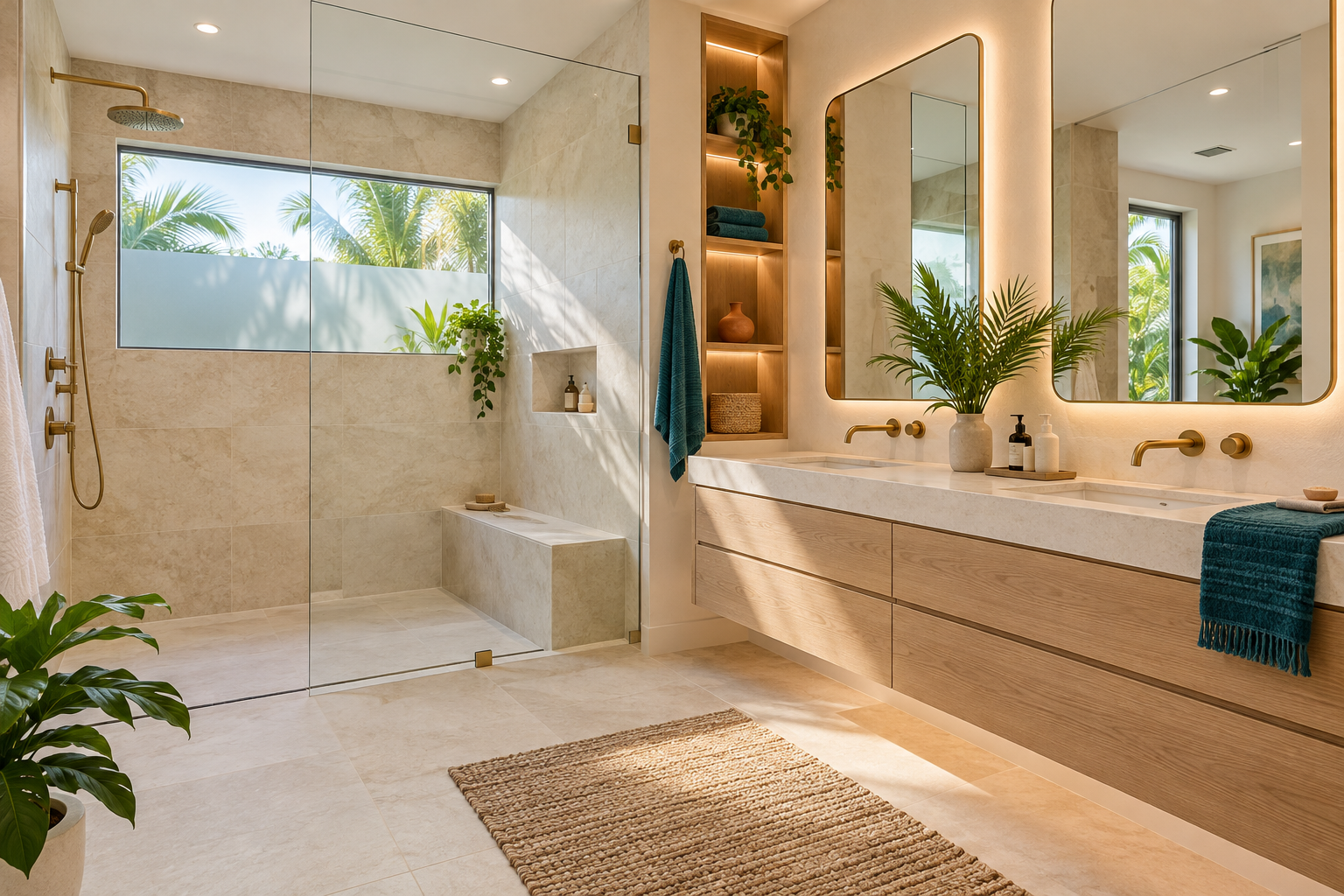
Frameless glass is the cleanest in appearance. With no frame, the eye reads the glass as nearly invisible, so tile, niches and fixtures take center stage. It makes a small bathroom feel larger because there is nothing to break up the view. Many people choose it for exactly this reason.
Semi frameless glass shows a little more metal. A frame along the top or sides can give the shower a more defined outline, and some people prefer that look. A frame also suits certain styles of bathroom, such as industrial or traditional looks where visible metal feels natural. The finish of the metal, such as brushed, polished or matte black, becomes a design choice.
Think about the surroundings as well. If your tile is bold or busy, a frameless panel lets it shine. If the bathroom is simple, a hint of frame can add structure. Look at the glass in a showroom or a friend's home, and notice how light passes through the edges, since edges and hardware are where the two styles differ most.
Lighting and mirrors play a part as well. Clear glass lets light travel from the bathroom into the shower, so a dim shower may brighten when the door is clear. Glass can also reflect, so a bare bulb across from a glass panel may glare. Frosted, ribbed or tinted glass offers privacy at the cost of some openness, and each of those options changes how the room looks at night with the lights on.
Glass thickness and structure
Frameless enclosures rely on the strength of thick glass, because the glass itself carries the weight of the door. Semi frameless enclosures may use somewhat thinner glass because the frame helps carry loads. Thickness affects weight, feel and how solid the door seems when closed. A thicker door feels substantial, while a thinner one may flex a little.
Safety glass is used in showers, and it is made to break into small pieces instead of sharp shards if it is damaged. Local rules may apply to the glass used in wet areas, so ask your remodeler and your city building department what is required. Requirements vary by city, building and community.
Weight matters for installation. A heavy glass door puts stress on hinges and on the wall or curb that supports them, so the structure behind the tile has to be planned. Solid blocking or reinforcement behind the wall may be needed, and that should be decided before tile goes up. The page on shower glass door options explains the choices in more detail.
Hardware: hinges, handles and clips
In a frameless shower, hardware does the work that a frame would do. Hinges attach the door to the wall or to a fixed panel. Clips or small channels hold fixed panels in place. Handles and pulls are mounted through the glass. Because there is so little metal, each piece is visible, and the quality of the finish matters.
Semi frameless designs may use a header bar across the top to stabilize panels, or partial frames on fixed sides. Hardware is often less exposed to stress because the frame spreads the load. Some systems are easier to adjust after installation, which matters when a house settles or a door begins to drag.
Finish matters in this climate. Salt air and humidity can pit and dull some metals. Ask what the hardware is made of and how it is finished, and ask how it is expected to age near the coast. The guide on bathroom hardware and pulls compares common styles and finishes.
Handles deserve a moment of thought. A long bar pull gives a firm grip with wet hands, while a small knob looks neat but can be harder to use. A towel bar that doubles as a door handle saves a fixture but means a wet towel hangs against the glass. Try the handle in a showroom if you can, and imagine using it with soapy hands, since that is the moment it really counts.
- Frameless hardware is more visible and carries more of the load.
- Semi frameless frames can spread weight across more points.
- Finish and material matter in humid, salty air.
- Ask how hinges are adjusted if the door begins to drag.
- Match the metal finish to your faucet and fixtures.
Sealing, splashing and where water goes
A shower enclosure has one main job: to keep water inside. Frameless doors are usually sealed with thin clear strips along the edges, and there is often a small gap at the hinge side or the top. A little splashing may escape, particularly with strong spray or a wide opening. Good design places the showerhead away from the door and uses panels of the right size.
Semi frameless doors often have more continuous seals because the frame gives something for the gasket to press against. That can mean fewer drips onto the floor, though results depend on the exact design and installation. No glass shower is perfectly sealed, and a bath mat or a gentle slope in the bathroom floor is wise either way.
Sealing connects to the structure underneath. The curb or threshold, the floor slope and the waterproofing all affect where water goes. The page on waterproofing explains how wet areas are protected, and the page on a leaking shower pan describes what trouble can look like when water travels where it should not.
Spray direction is the quiet partner in all this. A showerhead aimed at the door will splash it whatever the style, while one aimed at the back wall barely touches it. A handheld sprayer on a bar lets you control the direction. Placing the valve so you can turn the water on without standing in the spray also keeps the door area drier. These are layout choices a remodeler can settle with you on paper.
Cleaning and the hard water question
Fewer frames mean fewer places for dirt and soap film to hide. Frameless glass has smooth surfaces that wipe clean in one pass, with small gaps at hinges and seals to watch. Semi frameless enclosures have metal tracks or channels where water pools and soap scum collects, and these corners need regular attention.
Hard water spots show on both. Clear glass reveals every drop that dries, and mineral deposits can cloud the surface over time. A squeegee habit helps with either style. The page on hard water spots and buildup and the guide to glass shower cleaning explain what to expect.
Some glass is sold with a protective coating that helps water bead and roll away. Ask the maker what the coating does, how it is cared for and which cleaners are safe. Harsh cleaners and abrasive pads can damage coatings and scratch glass. Keep the manufacturer's instructions with your selections.
Do not forget the metal. Frames, hinges and channels can show water marks and soap film too, particularly in dark finishes. A brushed or satin metal hides marks more kindly than a polished one. Wiping metal parts with a soft cloth after cleaning glass takes a few extra seconds and keeps the whole assembly looking consistent through the years.
Ask for care information in writing. A short sheet that lists what cleaners are safe, how to adjust a hinge and how to order a replacement seal will matter long after the project is finished. Store it with your tile and fixture details so you can find it when you need it.
Fit, tolerances and the shape of your shower
Frameless installations demand careful measuring. Because glass is cut to size and cannot be trimmed on site, walls that are out of plumb, curbs that are uneven or tile that is thicker in one place can cause problems. Installers often measure after the tile is finished so that the glass fits what is actually built.
Semi frameless systems usually have more tolerance. A frame or adjustable channel can absorb small differences in the wall and curb. If your bathroom is older, or the walls are not perfectly square, this forgiving nature can be a real advantage.
Shape matters too. A simple alcove with a single door is straightforward in either style. A corner shower, a steam enclosure or a shower with several panels adds complexity. The more panels and angles, the more important it is to talk with your remodeler early, since the tile and the glass must be planned together. See the page on custom showers for more.
Doors that swing, slide or stay fixed
The question of frame is separate from how the door moves. A swinging door needs clearance in front of it, and it can swing in one or both directions depending on the hinges. A sliding door takes up less room but has tracks. A fixed panel with an open entry, often called a walk in design, has no door at all.
In a small bathroom, an outswinging door can hit a vanity or a toilet. The page about a bathroom door that swings into the way covers clearance questions that apply to shower doors too. Check the swing against every nearby fixture.
A walk in panel can be framed or frameless, and it can be a handsome way to keep a shower open and easy to enter. It suits larger showers where spray will not reach the opening. The page on walk in showers explains how these layouts work.
Planning the wall, curb and floor for glass
Glass is heavy and unforgiving, so the structure behind it has to be ready. Hinges on a frameless door attach to a wall or a fixed panel, and the wall must be able to hold the load. Solid backing behind the tile, set before the walls are closed, gives the hardware something to grip. This is a planning point to raise at the start, not after tile is installed.
The curb or threshold needs to be level and straight along the line where the glass sits. A floor that slopes toward the drain is correct for water, but the glass must be set so the door still closes cleanly. A curbless entry, as described on the page about curbless shower planning, changes where seals meet the floor and needs extra thought.
Tile layout affects glass too. Grout lines, trim pieces and niche positions should line up with panel edges and hinge locations where possible. If a niche sits where a hinge would go, one of them has to move. Putting the glass drawing and the tile drawing on the same sheet prevents these conflicts.
Maintenance over the years
Frameless doors rely on hinges, and hinges can loosen with use. Over time a door may sag slightly, rubbing the glass or failing to latch. Most systems can be adjusted, and it helps to ask who does that work and how it is handled. Seals may need replacement as they age, especially in a humid room.
Semi frameless systems have more parts, which means more places for wear but also more places where adjustments can be made. Metal frames can corrode in salty air if the finish fails, so ask about the material and the finish. Check track and channel areas for buildup and keep drain holes clear where they exist.
Whatever you choose, ask what service looks like. Who can adjust a hinge? Where can you get replacement seals? What does the maker say about care? These simple answers make living with the shower much easier a few years from now.
Hurricane season is a reminder that glass in a home deserves respect. A shower enclosure sits indoors, away from wind, but a house that has settled or shifted over the years may show it first at the door. If a door that once closed neatly begins to drag, have it looked at promptly instead of forcing it, since stress on tempered glass edges is something to avoid.
How to choose for your bathroom
Begin with how you feel about cleaning and appearance. If a clean, open look matters most and you are willing to squeegee the glass, frameless is appealing. If you prefer a more forgiving fit, a bit of structure and perhaps more continuous seals, semi frameless may suit you better. There is no wrong answer.
Next, consider the room. Check the walls and curb, the swing clearance, the spray direction and the tile you have chosen. Ask your remodeler how each style would work in your actual shower, and ask to see the details of hinges and seals.
Think about who else lives in the home. Children and older family members may find a heavy door harder to move, and a household with pets may want a door that is easy to push open. If anyone uses a mobility aid, a wide opening with no door at all may be more practical than either style. Bring those details to the conversation so that the plan fits the real household.
Hollywood Bathroom Remodeling starts with a real conversation about how the room is used, plans layout, wet areas, materials, storage, lighting and fixtures together, and refines selections before construction begins. The guide to frameless glass versus framed enclosures and the comparison of a bathtub versus a walk in shower are useful next reads, as is the page on bathroom remodeling in Hollywood.
Good to know
Common questions
Is frameless glass always more open looking?
Usually, because there is no metal around the panels, but hardware and thick glass edges are still visible. Clear glass with minimal clips and hinges gives the airiest result. Semi frameless glass adds some metal, which can define the shower and suit certain styles.
Do frameless showers leak more?
They can splash more at gaps near hinges and edges, particularly with strong spray or a wide opening. Good layout, panel size and showerhead placement reduce this. Semi frameless designs often have more continuous seals. No glass shower is perfectly sealed, so plan the floor for occasional splashes.
Which style is easier to clean?
Frameless glass has fewer frames and tracks for scum to collect, so it often wipes clean in one pass. Both show hard water spots. A squeegee habit and gentle cleaners keep either style clear, and a protective coating may help if cared for as the maker directs.
Can glass be adjusted after installation?
Many systems have hinges or channels that can be adjusted a little if a door drags or a seal gaps. Semi frameless frames often allow more adjustment. Ask who handles service, and keep the manufacturer's information with your records.
Does glass thickness matter?
Yes. Thicker glass feels more solid and carries more weight, which suits frameless doors. It also makes the walls and curb work harder, so blocking and structure must be planned before tile is set. Ask what glass is proposed and why.
Are there rules for shower glass?
Safety glass is normally used in wet areas, and local rules may apply. Requirements vary by city, building and community, so ask your city building department and your association what applies, and let your remodeler know before glass is ordered.
Your bathroom starts with a conversation