
Hollywood Bathroom Remodeling Hollywood and nearby cities
Low Maintenance Bathroom Planning for Hallandale Homes
Some homes are lived in all year, and others sit quiet for months. This general guide for Hallandale homeowners shows how to plan a bathroom that stays fresh, is easy to care for and works for years to come.
 Hollywood Bathroom Remodeling
Warm design. Clear planning.
Hallandale homeowners
Planning for the way your home is really used
Not every home is occupied the same way. Some households live in their bathroom every day of the year. Others are away for weeks or months, return with guests, or share a home with family who visit in waves. A bathroom that suits one pattern can frustrate another, so the first planning question is simple: who uses this room, and when?
Time away also shapes how you decide. If you visit for a few months at a time, you may want selections finalized in advance, deliveries scheduled when someone can receive them, and progress shared by photographs while you are elsewhere. A calm, step by step plan fits that pattern far better than a series of hurried choices on short visits, and it leaves time to compare samples properly.
A part time or seasonal home creates its own demands. A bathroom that is closed up for long stretches in warm, humid weather can develop musty smells, dried out drain traps and stale air. A bathroom in a full time home faces daily steam and wear. Both benefit from planning, but the priorities differ, and it helps to say clearly which one you have.
This page is general guidance for homeowners in and around Hallandale. It does not describe particular buildings, streets or communities, and it makes no claim about past work in the area. Use it as a way to organize your own thinking before you speak with anyone.
What low maintenance really means
People say they want a low maintenance bathroom, but the phrase means different things to different people. For some, it means surfaces that wipe clean in a minute. For others, it means finishes that do not need sealing, hardware that does not tarnish, and a design with few places for dirt and moisture to hide. Naming what you want to avoid helps the planning.
Every material asks for something. Porcelain tile asks for very little beyond cleaning and grout care. Natural stone asks for sealing and gentle products. Painted walls ask for occasional touch ups. Glass asks for regular wiping. Fewer joints, fewer ledges and fewer decorative details generally mean less upkeep. A simple design is not a plain one; it is one that stays attractive without effort.
Paint and walls matter more than people expect. In a humid climate, a bathroom paint formulated for moisture and mildew resistance holds up better than a standard interior paint, and a satin or semi gloss sheen wipes clean more easily than flat. Ask about the primer and the preparation as well, since a good coating on a poorly prepared wall can still peel.
Choose carefully where you accept more work. Many homeowners are happy to tend a natural stone vanity top because they love how it looks, while preferring easy care in the shower. Our guide on vacation home bathroom planning discusses these tradeoffs for homes that are not occupied all year.
Showers that are simple to keep clean
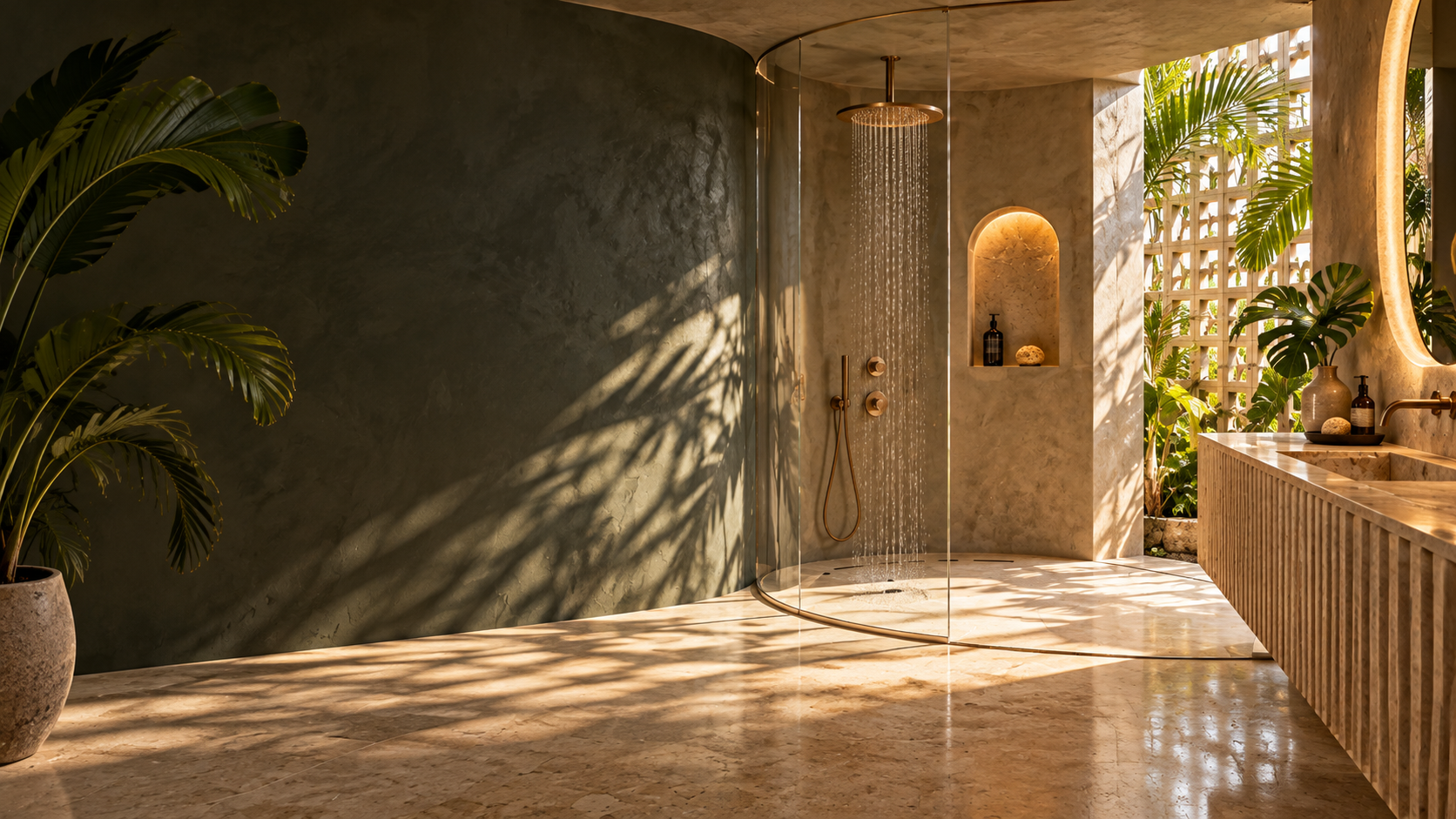
The shower is where cleaning effort concentrates. Large format tile has fewer grout lines, which reduces the places where mildew can start. A frameless glass panel avoids the tracks and frames that collect residue. Built in niches are more convenient than hanging caddies, but each niche must be properly waterproofed and sloped, and the corners need to be kept clean.
The floor of the shower deserves thought. Small mosaic tile grips underfoot but has many grout joints. A larger tile with a slight texture offers fewer joints but can be slick if the finish is too polished. Some households choose a solid surface or a large slab to minimize seams. Our page on custom showers describes these options.
Fixtures influence upkeep too. A showerhead with soft nozzles can be wiped to prevent mineral buildup, a handheld sprayer lets you rinse the walls and glass, and a simple lever valve is easier to clean than an ornate handle. Hard water spots are a common complaint, and surfaces that tolerate regular wiping with a mild cleaner stay presentable. If spots return no matter how often you clean, mention it to a remodeler, since the cause may be the water itself and not your habits.
Think about drying as well. A shower that dries thoroughly after use resists mildew far better than one that stays damp. Good ventilation, a squeegee within reach and a layout that allows air to circulate all support that. A simple towel hook placed outside the spray keeps towels from staying wet.
Ventilation and closing up a home
If your home sits empty at times, ventilation planning must cover absence as well as use. A fan that runs only when someone switches it on does nothing for a closed bathroom. Consider a fan with a humidity sensor, or ask about options for periodic ventilation. A neighbor or property manager who opens the door and runs the fan now and then can make a surprising difference.
Before leaving, small habits help. Dry the shower and counters, leave the shower door slightly open, empty the wastebasket and make sure nothing damp is left on a rack. Dried out drain traps can allow sewer odors into the room, so running water in each drain occasionally helps. Ask your remodeler how to care for the bathroom if it will be unused.
Our service page on bathroom ventilation fans explains the airflow basics. Duct changes, especially in a building, may be limited by rules, so ask your association before selecting a fan.
- Choose a fan with a timer or humidity sensing control.
- Ask who will open and air out the home when you are away.
- Dry the shower and counters before you leave for an extended stay.
- Run water in rarely used drains now and then.
- Keep a simple checklist taped inside a cabinet door.
Materials that forgive neglect
A bathroom that sees irregular use should be forgiving. Choose surfaces that tolerate humidity without constant tending. Porcelain tile and quality grout are common choices. Solid surface countertops and sealed quartz resist stains. Cabinets with sealed interiors and moisture resistant finishes cope better with damp air than raw wood.
Metal finishes are important. In humid or coastal conditions, thin plated surfaces can spot, flake or tarnish. Solid brass, stainless steel and good coated finishes tend to hold up. Check the care instructions, and keep them. If you cannot clean a finish easily, it will look tired sooner than it needs to.
Our guide on choosing tile for a Florida bathroom compares common tile types. As always, ask for samples and look at them in your room. Wet them and let them dry, and try a mild cleaner to see how they respond.
Comfort and ease for every visitor
A bathroom used by guests and family of different ages needs to be easy for everyone. Step height matters at the shower entry. A comfortable toilet height, a handheld shower sprayer, clear floor space and good lighting help almost every visitor, not just older ones. These features also make cleaning easier.
Lighting plays a role in comfort and safety. A bathroom that is dim at night invites missteps, so a low, gentle light near the floor or a warm night setting on a dimmer helps visitors who do not know the room. Switches should be easy to find from the doorway, and the mirror light should fall evenly on the face. Poor light is one of the most common complaints in older bathrooms and one of the easiest to improve.
Planning for comfort does not mean making the bathroom look clinical. Grab bars now come in many attractive styles, and blocking placed inside the walls during construction allows them to be added later without opening the wall again. A bench in the shower, a niche at a comfortable height and a nonslip floor finish all contribute. Many people call this planning for aging in place, though it benefits everyone.
Accessibility is a planning topic, not medical advice. If you or a family member has specific physical needs, speak with a qualified professional about what is appropriate, and bring that guidance to your remodeler. The service page on accessibility describes the planning side.
Storage, counters and the things guests need
A bathroom used by visitors needs a different kind of storage than one used by a single household. Guests need a clear place for their toiletries, a spare towel within reach and a spot to hang a robe or a wet swimsuit. They should be able to find what they need without opening every cabinet. A small basket of essentials on an open shelf or in a top drawer saves awkward questions.
For the owner, storage is partly about hiding the things that should stay private while the home is rented or shared. A lockable or simply closed cabinet for personal items, a tall unit for linens and drawers with dividers keep the bathroom neat with little effort. If the home is occasionally used by short term guests, durable, wipeable surfaces make turnover easier.
Counters deserve a practical eye. A countertop with an integrated sink has no seam where grime collects. A backsplash that is tiled or made from the same material as the counter avoids a gap behind the faucet. Our page on vanities and storage covers sizes and drawer layouts that help a shared bathroom stay orderly.
Condominium basics for Hallandale homes
Many homes in this part of South Florida are condominiums, and buildings usually have clear expectations for remodeling. Associations may ask for descriptions of the work, a contractor's documents, a deposit, and approval of working hours. They may restrict noisy tasks, require protection for hallways and elevators, and set rules for deliveries and debris removal.
Requirements vary from building to building, so ask your association directly and ask early. Request any rules in writing, and keep copies of approvals. Share them with your remodeler so the plan, schedule and deliveries fit what the building will accept. Our page on condo remodeling describes what to gather.
If you own a unit but live elsewhere, think about who will be your point of contact for the building. Managers, security desks and neighbors may all be involved at different moments, and a clear line of communication helps with deliveries, access and any water shutoff. Provide your remodeler with the correct names and a reliable way to reach you.
Sound and moisture are common concerns in buildings. Associations sometimes require a particular underlayment beneath tile to reduce noise, and they care greatly about leaks that could affect neighbors. This is why waterproofing and testing the shower before tile is installed deserve attention. A properly built shower protects your unit and the people around you.
Waterproofing you can trust and then forget
The most satisfying bathrooms are the ones you never have to think about, and that depends largely on what is hidden. A waterproof layer behind the tile, a shower floor sloped to the drain, sealed corners and a drain connected to the waterproofing all work together to keep water where it belongs.
Ask your remodeler to explain the system in plain language. What material is used behind the tile? How are corners and edges treated? How is the floor sloped? How will the work be inspected or tested before tile goes in? Clear answers show that the details have been thought through. Our guide on shower waterproofing explained helps you follow along.
Drains are part of the waterproofing story as well. The drain assembly must connect cleanly to the waterproof layer, and the slope toward it must be consistent so water does not pool in corners. A shower that holds standing water after use invites mildew and odors. A linear drain along one wall or a traditional center drain can both work, as long as the floor is planned around them.
Keep records. Photographs of the wall and floor before they are closed, along with product names and care instructions, are valuable if you ever sell the home or need to troubleshoot a problem. A short folder or a few notes on your phone is enough.
Permits, storms and practical timing
City requirements for permits and inspections depend on what is being changed. Replacing a vanity is not the same as moving plumbing or altering walls. Call your city building department, describe the work and ask what applies. Our planning page on permit and association questions provides a list of what to ask.
Hurricane season is another timing factor. If you are away for part of the year, think about when the project will happen and who will be present to receive deliveries and respond to a storm watch. Ask how materials are stored and how an open work area is secured. Our page on hurricane season bathroom remodel planning adds more ideas.
If you are not on site during construction, think about how decisions will be made. Who approves a change? How will you see progress? A clear plan for communication keeps the project on track and avoids surprises when you return. Agree in advance on how photographs will be shared, how questions will be answered and who has authority to approve small changes. That arrangement is especially valuable when time zones or travel make it hard to talk on short notice.
How we would begin
Our process starts with a real conversation. We listen to how the home is used, what is not working, and what you want. Then we plan the layout, wet areas, materials, storage, lighting and fixtures, and we refine the selections with you before construction begins.
To prepare, gather photographs, a sketch with rough measurements and notes about how often the home is occupied. Our bathroom measurements checklist can help. If you are in a condominium, collect the building rules too.
Hallandale Beach is also covered on a separate page, bathroom remodeling in Hallandale Beach, and homeowners nearby may want to read about bathroom remodeling in Lazy Lake as well. When you feel ready, a phone call is all it takes.
Good to know
Common questions
What makes a bathroom low maintenance?
Fewer grout lines, durable moisture tolerant surfaces, simple shapes with few ledges, hardware that resists spotting and a fan that actually clears the steam. No bathroom needs zero care, but good planning shifts effort from constant scrubbing to a short routine. Decide which materials you are glad to tend and which you are not.
How do I protect a bathroom while I am away for months?
Dry surfaces before leaving, leave the shower door ajar, make sure nothing damp stays behind and arrange for someone to open the door and run the fan now and then. Occasionally run water in rarely used drains. Ask your remodeler about ventilation controls suited to a home that is sometimes empty.
Should I add grab bars even if nobody needs them now?
Many people plan for them without installing them yet. Solid blocking placed inside the walls during construction lets bars be added later without opening the wall. Where bars should go depends on the person using them, so speak with a qualified professional about specific needs before choosing locations.
Does my condo association control my bathroom remodel?
Often it has a say in scheduling, noise, deliveries, protection of common areas and sometimes materials beneath the floor. Rules differ by building. Ask your association what is required in writing, and share the answers with your remodeler before plans are finalized. Your city has separate requirements.
Is natural stone a poor choice for a seasonal home?
Not necessarily, but it asks for sealing, gentle cleaners and realistic expectations about etching. If you are away often, porcelain that looks like stone may suit better. Many people use natural stone on a vanity top, where upkeep is easier, and porcelain in the shower.
What should I bring to a first conversation?
Photographs, a rough sketch with measurements, notes on how often the home is occupied, your list of must have and nice to have features and any building rules you have. You do not need product names. A clear description of daily use is the most helpful starting point.
Your bathroom starts with a conversation