
Hollywood Bathroom Remodeling Hollywood and nearby cities
Permit and Association Questions to Ask Before Bathroom Work
Requirements differ by city, building and community, so this page does not tell you what the rules are. It gives you the questions to ask your city building department, your association and your insurer, and how to keep the answers organized.
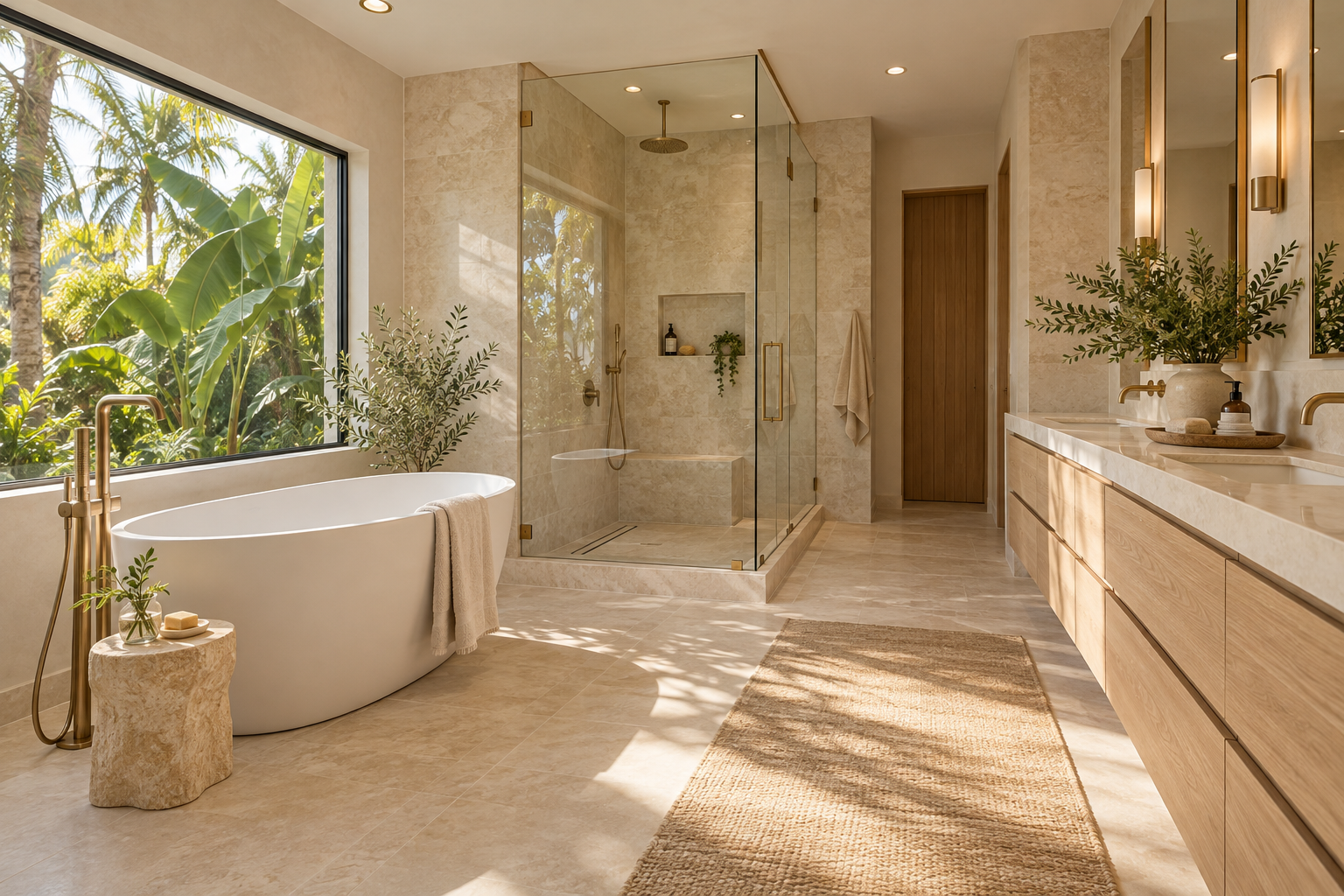
 Hollywood Bathroom Remodeling
Warm design. Clear planning.
Approvals planning
Why asking comes before planning
Every bathroom project sits inside a set of rules that you cannot see from the room itself. A city building department may have its own expectations about what work needs approval, who may perform it and what inspections follow. A condo association or homeowners association may add expectations about hours, materials, noise and protecting shared areas. Your insurer may have its own interest in certain kinds of work.
None of these requirements is the same everywhere. They differ from city to city, from building to building and from one community to the next, and they change over time. For that reason this page does not state what applies to you. It teaches you to find out, because the only reliable answer comes from the people who set and enforce the requirements for your property.
Asking early is the practical choice. A plan that is drawn without knowing the limits can be forced to change midway, which affects the layout, the materials and the order of work. A short set of calls and emails at the start usually prevents that, and the answers become part of your project record. The wider planning picture is outlined in the bathroom remodel planning checklist.
Who to ask and what each can tell you
There are usually four sources of answers. The first is your city or municipal building department, which can explain what kinds of bathroom work need approval and what documents are involved. The second is your condo association or homeowners association, which can explain community rules and any approval process. The third is your property manager or building management if you live in a managed building. The fourth is your insurance agent.
Each source answers a different kind of question. The building department speaks to the legal side of construction in your city. The association speaks to private rules that bind your property through its governing documents. The manager speaks to the practical side, such as elevator reservations and delivery windows. The insurer speaks to coverage and notification. Mixing these up causes confusion, so address your questions to the right party.
Write down the name of every person you speak with, the date and what they said. Ask for answers in writing when you can, because conversations are easy to remember differently later. If a source gives a general answer, ask whether it applies to your specific property and your specific scope of work. The page about condo bathroom remodeling and your association adds context for owners in managed communities.
Describing your project clearly
The answers you receive depend on how well you describe the work. A vague question such as whether you can remodel a bathroom gets a vague answer. A clear description gets a useful one. Before you call anyone, write a short summary of what you intend to do, using plain language and avoiding assumptions.
State what is being changed. Say whether the fixtures stay in the same positions or move. Say whether the shower or tub is being replaced, whether walls are being opened and whether the floor is being removed. Say whether the layout changes, whether any wall is moved and whether new electrical items such as lighting, outlets or a fan are planned. Say whether the work reaches the ceiling or affects a space below or beside you.
Give practical details as well: the address, the unit number if relevant, the floor, the size of the bathroom, the materials you expect to use and the kind of professional who will do the work. The more precisely you describe the scope, the more reliably the other party can tell you what applies. The measurements and photographs described in the bathroom measurements checklist are a good source for this description.
- Write a plain summary of the work before making any call.
- Say clearly whether fixtures or walls move.
- Mention electrical, ventilation and plumbing changes you expect.
- Include the address, unit and floor so answers match your property.
Questions for your city building department
Start by asking whether the work you describe needs approval from the city and, if so, what kind. Ask who may apply for it and what documents are expected, such as drawings, product information or contractor details. Ask whether the department has a checklist, a handout or an online page that explains the process, and whether you can have a copy.
Ask what inspections apply and when they occur during the work, and who schedules them. Ask what the department expects to see before walls are closed. Ask how the department handles changes during the project, for example if a plan changes because something unexpected is found. Ask what happens if approval is required and the work was already started.
Ask about records for your property. Some cities can tell you whether previous work was approved and closed. Ask whether any older approvals remain open, since unresolved ones can complicate a new project. Ask about timing in general terms, understanding that no one can promise a schedule. For topics that involve waterproofing and inspections, the page on waterproofing planning for bathrooms explains what to bring up.
Questions for your condo association or HOA
Ask whether your governing documents contain rules on bathroom remodeling and where you can read them. Ask whether you need written approval before work begins, who gives it, what the application includes and how long the association typically takes to respond. Ask whether there is a fee or a deposit and whether the association requires the person performing the work to show anything in advance.
Ask about hours and logistics. Many buildings limit work to certain days and times, restrict noisy activities and require reservations for elevators or loading areas. Ask how materials may be delivered and stored, how debris may be removed and what protection is required for hallways, elevators and common areas. Ask what notice neighbors must receive.
Ask about the building itself. In a condo, find out who is responsible for the plumbing stack, the shutoff valves, the waterproofing below the floor and the structure of the slab. Ask whether there are rules about flooring underlayment, sound control or changes to the shower or tub. Ask whether you must shut off water for others and how that is arranged. The planning notes in condo bathroom remodel logistics go deeper into these points.
A remodel creates debris, noise and traffic, and communities usually have preferences about all three. Ask your association where debris may be placed, whether a dumpster is allowed and where, how hallways and elevators must be protected and how deliveries are scheduled. Ask what hours are acceptable for loud work and whether there are quiet days.
Ask who needs to be notified. Some buildings expect a notice to the neighbors above, below and beside your unit. Some require that you tell the management office the dates in advance. If your remodel might involve shutting off water to a stack, ask how that is arranged and who must approve it.
Neighbors are part of a successful project even when they are not part of the approval. A courteous heads up about the work, the dates and a contact person for concerns often prevents friction. Ask your remodeler how they handle dust, noise and cleanliness, and read protecting your home during demolition for ideas on limiting the impact.
Questions for your insurer
Insurance is easy to overlook until a problem arises. Ask your insurer or agent whether a remodel affects your coverage and whether they need to be notified. Ask how the policy treats water damage that begins during construction and whether there are conditions on who may do the work.
If you live in a condo, ask about the difference between the association's master policy and your own unit owner policy, and which one responds to different kinds of damage. Ask whether your coverage includes the upgrades you plan, since a new finish level may change the amount of coverage you carry.
Ask what documents you should keep. Photographs of the bathroom before work, receipts, product records and written approvals are useful if a claim ever arises. Ask whether the professional you hire should provide proof of their own coverage, and what exactly to request. Do not assume anything about their coverage; ask to see it through the proper channel.
Finally, ask what steps the insurer expects if water damage is discovered while a wall is open. Knowing in advance whom to call, what to photograph and what to avoid disturbing makes a stressful moment far more manageable. Write the answer on the first page of your project folder so that you and your remodeler can find it without searching. It is also wise to ask who holds the key to the main water shutoff in your building, since that person matters most when something goes wrong.
Questions to ask the person doing the work
Your remodeler is also a source of information, though not the final authority. Ask who is responsible for applying for any approval the city requires, and who communicates with the association. Ask how they handle inspections and what they need from you. Ask how changes in scope are documented. The page on questions to ask a bathroom remodeler gives a wider list.
Ask what the remodeler will need from the city or association before work can begin. Ask whether they have experience with your building or city, and how they plan around its rules. Ask what happens to the schedule if an approval takes time, and who communicates with you in that case.
Do not rely on a verbal statement that everything is fine. Ask for the answers in writing and compare them with what the city and the association told you. If anything differs, ask the remodeler to resolve it with the relevant party before work starts. You are responsible for your property, and clear records protect you.
Questions about plumbing, electrical and structure
Many bathroom projects touch systems beyond the finishes, and those systems are the ones most likely to be regulated. When you speak with the city, ask specifically how they treat changes to plumbing lines, the replacement of a shower valve, moving a drain, adding or relocating lighting and outlets, installing a new exhaust fan or opening a wall that holds services. Ask which of those would be considered part of your project.
Ask who is allowed to perform each category of work in your city and how that is shown. You are not asking for a legal opinion. You are asking the department what it expects to see for a project like yours. Ask whether product information, such as a specification sheet for a shower system or a waterproofing assembly, is needed for approval.
Ask about structure as well. If your plan involves changing a wall, lowering a floor for a curbless shower or adding support for a heavy tub, ask how the city handles those changes and what documentation is expected. Describe the idea in plain terms and let the department tell you the process. The page on moving plumbing fixtures explains why layout changes bring more questions than like for like replacements.
Hurricane season and coastal considerations
South Florida homes and condos live with hurricane season, and some communities have rules or expectations related to storms, shutters and work during certain periods. Ask your association whether they place any limits on construction during storm warnings or when a storm is approaching. Ask how materials left on site are secured.
Ask your city and your insurer whether coastal location, wind exposure or flood related conditions affect your work or your coverage. Do not assume. Properties near the water may face additional expectations that others do not. If you live in a flood prone area, ask what applies to changes at floor level and what documentation they require.
Planning the timing of work around the season is also a practical matter. Delays from weather can affect deliveries and schedules. The page on hurricane season bathroom remodel planning discusses how to think about that without stating any rule.
Keeping a record of every answer
Create a simple folder, on paper or on your phone, for approvals and communications. Include the names and contact details of the people you spoke to, the date, the question and the answer. Save emails and screenshots, and file copies of any forms you submit or receive.
Add the project documents as they appear: drawings, product sheets, written approvals and any notice sent to neighbors. Keep photographs of the bathroom before work begins and at stages when walls are open. These records help if there is ever a dispute or a question about what was done.
A tidy record also helps the remodeler. When everyone is working from the same documents, questions get answered sooner and misunderstandings are less likely. The method fits well with the practice described in the bathroom selections schedule, which tracks product decisions in a similar way.
Bringing your answers to the planning conversation
Once you have gathered answers, share them with the person who is designing your bathroom. They affect the layout, the materials, the order of work and the schedule. A designer can adjust a plan with ease when constraints are known early and only with difficulty when they appear late. Bring the written answers, the names of the people who gave them and any forms you were handed, and walk through them one by one so nothing is left as an assumption. If an answer is still open, say so plainly, and agree who will follow up and by when. Planning around a known open question is far easier than discovering it in the middle of construction.
Hollywood Bathroom Remodeling begins with a real conversation about how the room is used, then plans the layout, wet areas, materials, storage, lighting and fixtures, and refines selections before construction begins. Your notes on approvals and association rules become part of that planning, and requirements remain a matter between you and the authorities that set them.
For related reading on the full process, see preparing your home for a bathroom remodel. When you are ready to talk, call and bring your list of questions and answers.
Good to know
Common questions
Does every bathroom remodel need approval from the city?
This page cannot say, because requirements vary by city and by the kind of work. Ask your city building department to look at your specific scope, such as fixture changes, moved plumbing or new electrical items, and tell you what applies. Ask for the answer in writing.
Who applies for any needed approval?
It depends on the city and the kind of work. Ask the building department who is allowed to apply and what they require. Ask your remodeler who will handle the paperwork and communicate with the city, and confirm the responsibilities before work begins.
Do I need association approval for a condo bathroom?
Many associations ask for approval, but this varies by building and community. Read your governing documents and ask the association or property manager directly. Ask about applications, fees, work hours, elevator use, protection of common areas and notice to neighbors.
Should I tell my insurance company about a remodel?
Ask your insurer or agent. Policies differ, and some may have conditions about notification or who may perform work. If you live in a condo, ask how your policy interacts with the association master policy. Keep photographs and records of the project.
What if the answers from different sources conflict?
Ask the relevant parties to clarify in writing and involve your remodeler in resolving it. The city, association and insurer each answer for their own area. Do not proceed until you understand which requirement applies and how it will be met.
What should I save during the project?
Save written approvals, emails, drawings, product sheets, receipts and dated photographs. Note the names of the people you talked to and what they said. A single organized folder helps if questions come up later and makes communication with your remodeler smoother.
Your bathroom starts with a conversation