
Hollywood Bathroom Remodeling Hollywood and nearby cities
Waterproofing for Hollywood homes and condos
Waterproofing is the part of a bathroom nobody sees after the tile goes up and everybody feels if it fails. Here is how the wet area system is planned for Hollywood, Florida homes and condos.
 Hollywood Bathroom Remodeling
Warm design. Clear planning.
Wet area systems
What actually sits behind the tile
Tile looks like the barrier between the water and the house, but it is not. Tile and grout are a finish, and grout joints are porous by nature. The real protection lives underneath, in a layered system of substrate, a waterproofing membrane, and a slope that sends water to the drain.
In a Hollywood bathroom, that system has to do its job every day in warm, humid air. Showers get used year round, windows stay closed for the air conditioning, and moisture has nowhere to go except out through the exhaust fan. A wet area that is built well simply keeps that moisture on the surface of the membrane, where it belongs, until it runs down the drain.
This page is written for Hollywood homeowners and looks at waterproofing through the lens of local homes and condos, in general terms. If you want the broader explanation of how the service works across every project, read the main waterproofing service page. Here the focus is on what changes when the house is in Hollywood.
Why salt air and constant humidity raise the stakes
South Florida bathrooms live in a damp climate even when nobody is showering. Air that is already heavy with moisture does not dry a wet wall out, so any water that gets behind the surface tends to stay there. Homeowners closer to the water also deal with salt in the air, which is hard on metal fasteners, fixtures and exposed edges.
That does not mean every Hollywood bathroom needs something exotic. It means the basics matter more here: a continuous membrane with no gaps, sealed transitions where one surface meets another, and a ventilation plan that actually pulls humid air out of the room. Small shortcuts that might never show up in a dry climate can show up here as stained grout, softened drywall or a musty smell.
Our planning conversations treat moisture as a system problem instead of a tile problem. We look at the shower, the walls around the vanity, the floor, and the fan together, because water and humidity do not respect the boundaries between those parts. You can read more about the air side of the equation in our guide to coastal air and bathrooms in Hollywood.
Homeowners often ask whether a bathroom that has never leaked needs this much thought. The honest answer is that a wet area is easiest to get right while it is open. A remodel is the one moment when the walls and floor are exposed, the plumbing is visible and every layer can be chosen deliberately. After the tile is set, the same improvement means demolition. That is why we spend time on it up front.
Older Hollywood homes: what the wall can tell us
Hollywood has a mix of older and newer homes, and bathrooms in older houses often carry more than one round of past work. A shower that was tiled over once and tiled over again can hide layers nobody remembers. Before anyone can promise a result, the wall has to be opened and looked at.
That is why good planning treats demolition as an information step. Once the old surface is removed, we can see the condition of the framing, the backing material, the existing plumbing and any signs of past moisture. Surprises are not unusual in an older bathroom, and the right response is to adjust the plan before new materials go on, not to cover the problem.
If your home falls into this category, our page on remodeling older Hollywood homes walks through the wider picture. For waterproofing, the key idea is simple: the new system should start from sound, dry, properly prepared surfaces, and anything that is not sound gets dealt with first.
Design inspiration and careful preparation.
Condos and townhomes: waterproofing with neighbors in mind
In a condo or townhome, a leak does not stay in your bathroom. It can reach the unit below, the wall you share with a neighbor, or common building elements. That raises the importance of a clean, well documented wet area and also means the association may have opinions about how the work is done.
We do not state what any particular building requires, because rules differ from one building to the next. What we can tell you is what to ask. Does the association require approval of the plan before work starts? Are there rules about which materials can be used on a floor above another unit? Are there limits on work hours, or on how materials move through common areas?
Bring those answers to the planning conversation and the waterproofing approach can be shaped around them. For a wider look at shared building situations, see our page on Hollywood townhome and condo bathrooms, and the guide to working with your association.
Walls and floors: one continuous envelope
The goal of a wet area is a continuous envelope. Imagine the shower as a shallow basin that happens to have walls. Water that lands anywhere inside it should have only one place to go, and that place is the drain. Any seam, corner or edge in that basin is a place where the system could fail, so each one is detailed on purpose.
The floor of a shower is built with a slope toward the drain, and the membrane follows that slope. The walls are prepared with a suitable backing material and the membrane runs up the walls well above where water is expected to reach. Where the wall meets the floor, where two walls meet, and where the wall meets the ceiling, transitions are reinforced instead of left to chance.
Different membrane systems exist, some applied as a liquid and some as a sheet. We do not name product brands here, and the right choice depends on the shower design, the substrate and the tile. What does not change is the principle: choose a system on purpose, install it as a complete assembly, and avoid mixing parts that were never meant to work together.
The small shapes that cause big problems
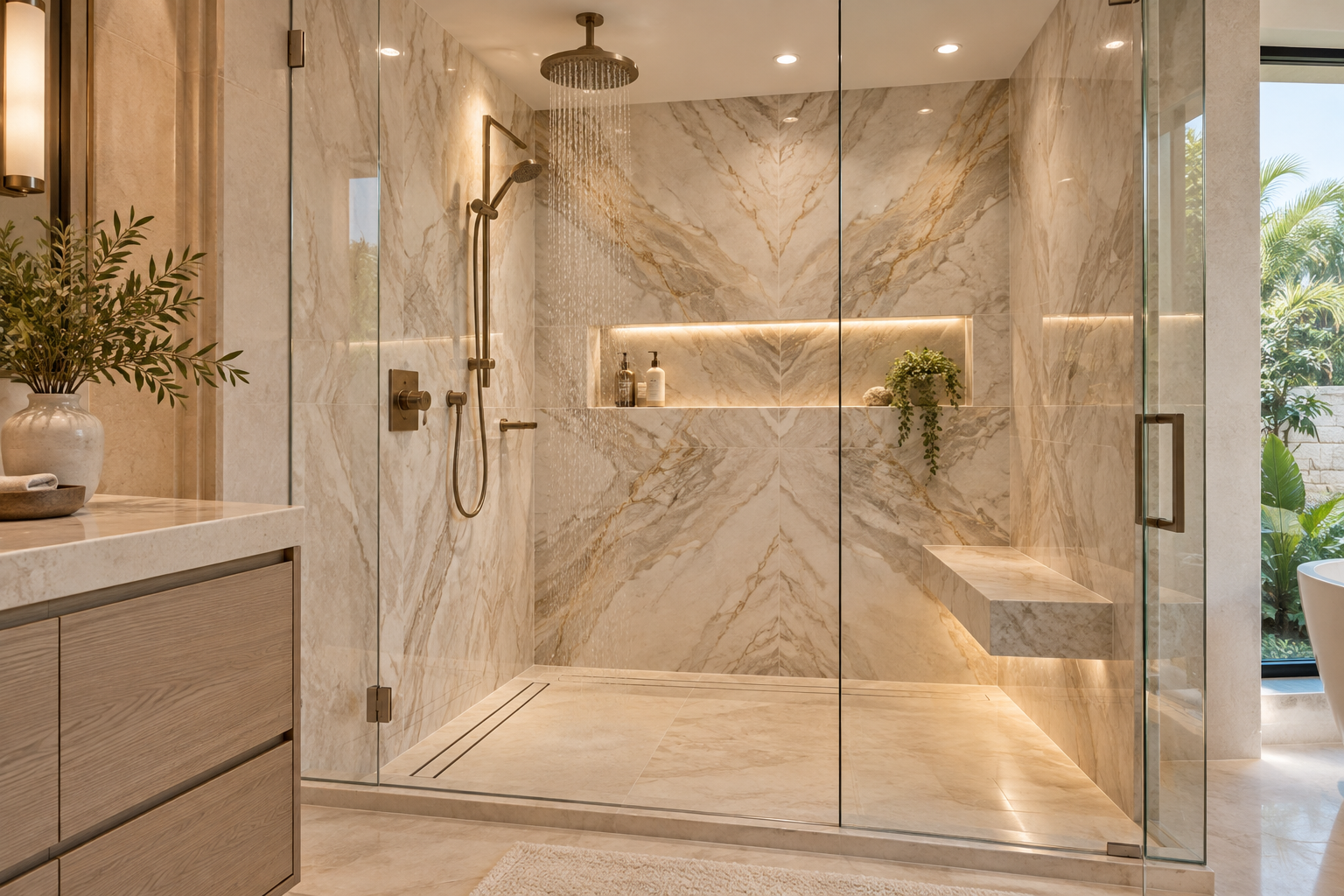
Curbs, benches, niches and corners get the most attention in waterproofing planning, because each one changes the geometry of the basin. A shower curb, the low ledge at the entry, has to be sloped and sealed so water never lingers on top of it. A bench needs a slight pitch back toward the drain so it sheds water instead of holding it.
A recessed niche is a hole cut into the wall, and every hole in a wet wall deserves respect. Its shelf should slope slightly outward, its inside corners should be reinforced, and its framing should be planned before the wall is closed. Niches are one of the most popular features in a modern shower, and the details that keep them dry are invisible once the tile is set.
Here are the details we usually walk through with Hollywood homeowners before work begins:
- The curb or threshold is sloped and sealed so water drains back into the shower.
- Benches and niche shelves are pitched slightly so water does not sit on them.
- Inside corners and wall to floor joints get reinforcement, not just a bead of sealant.
- Blocking for grab bars, shower seats and glass hardware is planned before the wall is closed.
- Every pipe, valve and fitting that passes through the wall is sealed on purpose.

Human from the beginning
A bathroom should fit the people who use it.
We start with the everyday questions: What feels crowded? What is difficult to clean? Where do you need more storage? What would make mornings easier? Those answers help turn a collection of materials into a room that feels natural to live with.
Tell us about your bathroomDrains, valves and every hole in the wall
Anything that goes through a wet wall or floor is a potential path for water. That includes the drain, the shower valve, the shower head arm, a handheld shower mount and any body spray. Each of these penetrations needs to be sealed into the membrane and not simply caulked around after the fact.
The drain deserves special attention. Whether it is a traditional center drain or a long linear drain, the drain body must connect to the membrane so water that reaches the surface can flow in but cannot get under. The slope of the floor has to be planned around the drain location, which is why the drain style and position are chosen early and not as an afterthought.
Plumbing in Hollywood homes sometimes limits where a drain can go, especially in condos where the floor structure is shared. This is a planning conversation, not a DIY job, and the work itself is done by trained trades. If you are curious how drain choices shape a shower, look at how a custom shower is laid out.
Checking the work before tile goes on
A waterproofing system is easy to inspect before tile covers it and almost impossible to inspect afterward. That is why many remodelers pause at this point and test the shower base. A common approach is to plug the drain, fill the pan with water to a set level and watch it for a period of time to see whether the level holds.
We bring this up with homeowners because it is a reasonable question to ask any contractor: how is the waterproofing checked before it is covered? Requirements for inspections and testing vary by city and by building, so we suggest asking your city building department and, in a condo, your association what they expect for your project.
The point of a pause like this is not paperwork. It is a chance to catch a problem while it is still a few hours of work, not a few months of leaks. Planning that pause into the process, rather than treating it as an interruption, is part of how a careful bathroom project is put together.
Homeowners can help by keeping the room accessible on the day of the check, and by confirming ahead of time who from the building, if anyone, needs to be notified. In a condo this might mean a short note to the management office. In a single family home it might simply mean knowing your city building department contact so questions can be answered early.
Beyond the shower: other places water goes
A lot of bathroom water damage starts outside the shower. Splash zones around a tub deck, the wall behind a vanity sink, the floor near the toilet and the corners where a floor meets a wall all see water over time. A floor with a long running small leak at a supply line can do as much harm as a failed shower pan.
For these areas, we talk about the right level of protection for the room. A tub surround and deck need the same careful membrane as a shower. A floor in a wet room might need a membrane under the tile. Walls near a vanity might need a moisture resistant backing. These are planning decisions, and they depend on how the room will be used.
Ventilation belongs in this conversation too. An exhaust fan that is sized and ducted properly keeps humid air from settling into walls and ceilings. Our guide to ventilation and humidity in Florida bathrooms goes through what a good fan plan includes.

Recognizable when we arrive
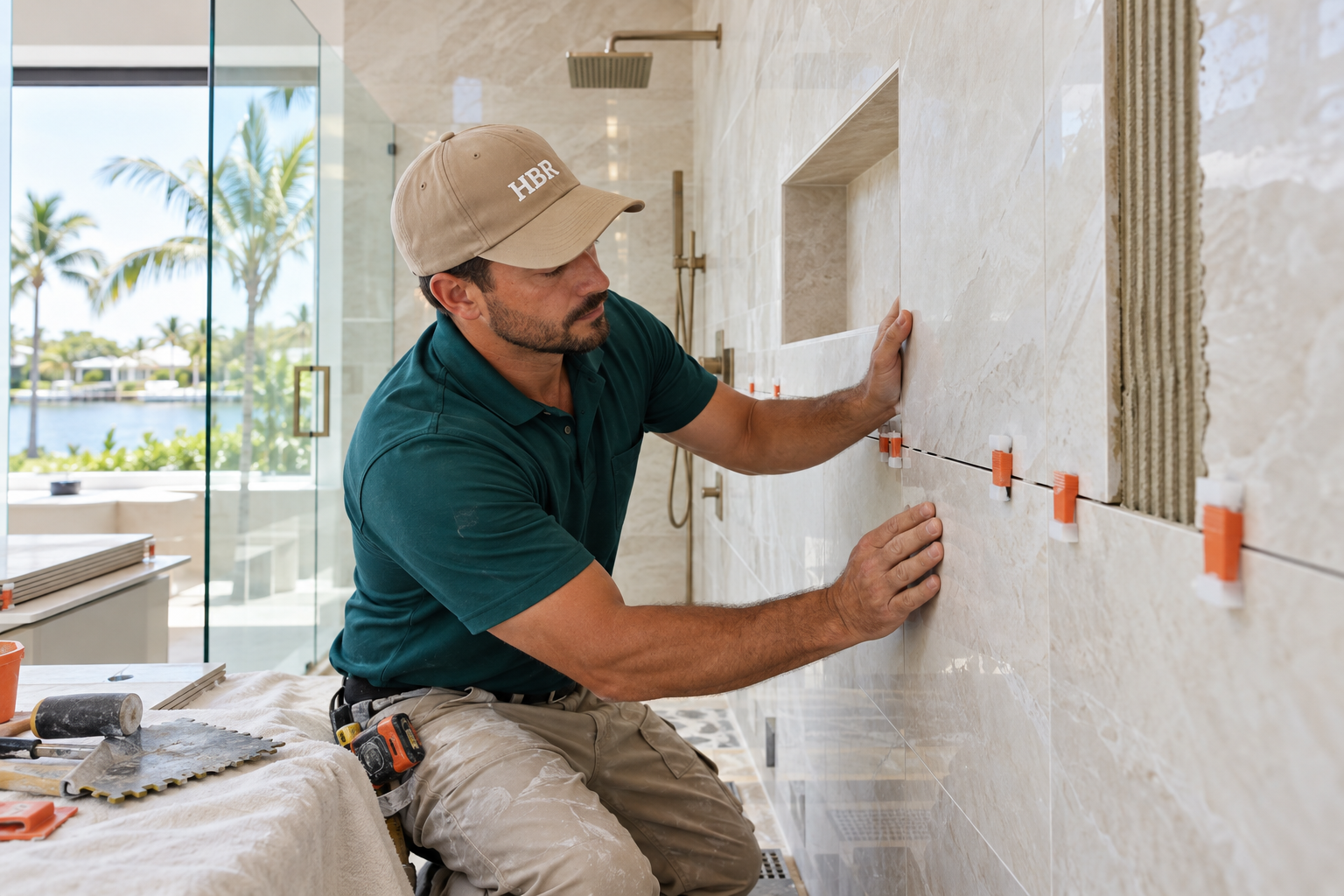
The Hollywood Bathroom Remodeling van and team.
Consistent branding helps homeowners know who is arriving. The same organized presentation continues inside the project, from room protection and tools to the materials and details discussed before work begins.
See our processTile, grout and the finish layer
Once the membrane is in place, the finish layer can be planned with confidence. Large format tile means fewer grout joints, which most homeowners appreciate for cleaning. Smaller tile on a shower floor helps the surface follow the slope to the drain. Natural stone brings character and also asks for regular sealing and care.
Grout and sealant choices matter for the long run. Grout joints should be filled completely and cured properly, and movement joints, the flexible joints at corners and changes of plane, should use a flexible sealant instead of rigid grout. A hairline crack in a rigid corner joint is one of the most common ways a shower starts to look tired.
Our detailed page on tile installation covers layout and setting, and our guide to shower waterproofing explained gives a plain language summary of the layers. Think of waterproofing and tile as two halves of one wet area, planned together.
It also helps to decide early how the finished shower will be cared for. Squeegeeing glass, running the fan after a shower and wiping standing water from a bench are small habits that extend the life of any wet area. A finish that fits how your household really lives, whether that is a busy family bathroom or a quiet guest suite, will hold up better than one chosen only for looks.
How we plan waterproofing with Hollywood homeowners
Our process starts by listening. You tell us about the bathroom, what bothers you about it now, and what you want it to do. From there we build the project direction: scope, layout, materials and priorities. Waterproofing shows up in that direction as a line item that is never left vague.
Next we coordinate the details across the surfaces, fixtures, storage, lighting and wet areas, so that each decision supports the others. A niche location, a bench height or a glass layout can all change what the membrane has to do. Then we prepare for construction by reviewing the plan and the information needed before work begins.
If you are thinking about a new shower or a bathroom that has shown signs of moisture, the next step is a conversation. You can request an estimate through our home page form, and we will talk through your room.
Good to know
Common questions
Is waterproofing really needed if the tile is sealed?
Yes. Tile and grout are a finish layer, and grout joints let a small amount of water through over time. The waterproofing membrane behind the tile is what keeps moisture out of the wall and floor. Sealing grout helps with stains and cleaning, but it does not replace a continuous waterproof layer under the tile.
Does humidity in Hollywood change how a shower is waterproofed?
The principles are the same everywhere, but the margin for error is smaller here. Humid air dries slowly, so moisture that gets behind a surface lingers. That makes continuous coverage, sealed transitions and good ventilation especially valuable in Hollywood bathrooms, whether the home is near the water or farther inland.
What should I ask my condo association about waterproofing?
Ask whether plans need approval before work begins, whether there are rules about materials or methods on floors above other units, and whether work hours or access limits apply. Every building is different, so get the answers in writing from the association and share them during planning.
Can an old shower be waterproofed without a full tear out?
Sometimes surface fixes are possible, but they depend on what is behind the finish. The wall usually has to be opened to judge the condition of the framing and backing. If hidden damage exists, covering it can make things worse. A planning conversation and an honest look inside the wall give the clearest answer.
How is a new shower base checked before the tile is installed?
A common approach is to plug the drain, fill the shower floor with water to a set level and watch whether it holds for a period of time. Ask your remodeler how they check the work before covering it, and ask your city building department what inspections apply to your project.
Do niches and benches make a shower harder to waterproof?
They add detail, not impossibility. Each niche or bench adds corners, edges and surfaces that must be sloped, reinforced and sealed. When these features are planned before the walls are closed, they can be built to shed water properly and stay dry behind the tile for the long run.
Your bathroom starts with a conversation