
Hollywood Bathroom Remodeling Hollywood and nearby cities
Hot Water and Your Bathroom: Planning for Bigger Fixtures
A larger shower or a deep soaking tub looks wonderful on a plan, but both draw more hot water than the bathroom they replace. This guide helps you think through demand before the design is final.
 Hollywood Bathroom Remodeling
Warm design. Clear planning.
Hot water planning
Why hot water belongs in the design conversation
Most bathroom plans begin with layout and tile, and hot water shows up late, if at all. That is understandable, since the water heater lives in a closet or garage and feels far away from the vanity and shower. It is out of sight, so it is out of mind. But the fixtures you choose decide how much hot water the room will ask for, and the heater decides how much it can give.
Think of the bathroom and the heater as a pair. A modest tub shower used by one person each morning barely tests the system. A spacious walk in with a large head, a handheld, and a long, relaxed routine asks for much more. A soaking tub that you fill deep on weekends asks for something different again, a large amount all at once.
Raising this early costs nothing. It simply means that when you sit down with your remodeler and your plumber, the question of supply is part of the plan rather than a surprise during construction. Good outcomes come when design and plumbing are shaped together.
It also keeps the budget conversation honest. A fixture that looks like a simple swap on a drawing can carry real consequences for the equipment behind the wall. When you know that early, you can decide whether the feature is worth it, whether a simpler version gives you most of the pleasure, or whether the project should include a bigger change to the plumbing from the start. Surprises are what turn a pleasant project into a stressful one, and a little planning removes most of them.
How a larger shower changes demand
A bigger shower rarely stays the same as the old one in how it is used. People tend to linger when the space feels generous, and they often add a second outlet such as a handheld or a rain head. Each addition increases the volume of hot water used in a typical shower, even if the temperature setting never changes.
Heat loss matters as well. In a large, open enclosure, warm air escapes more easily and the water cools as it travels from a high head to your body. Some people respond by turning the temperature up, which means drawing even more from the heater. A well planned enclosure, with glass that holds warmth and a layout that is not wastefully large, keeps the experience comfortable without extra effort.
If you are weighing shower size, our page on walk in showers covers how these spaces are laid out. It pairs naturally with our guide to water pressure and shower performance, because spray feel and hot water use are linked: a spray that feels full at a modest flow uses less of what your heater can offer.
What a soaking tub asks of your system
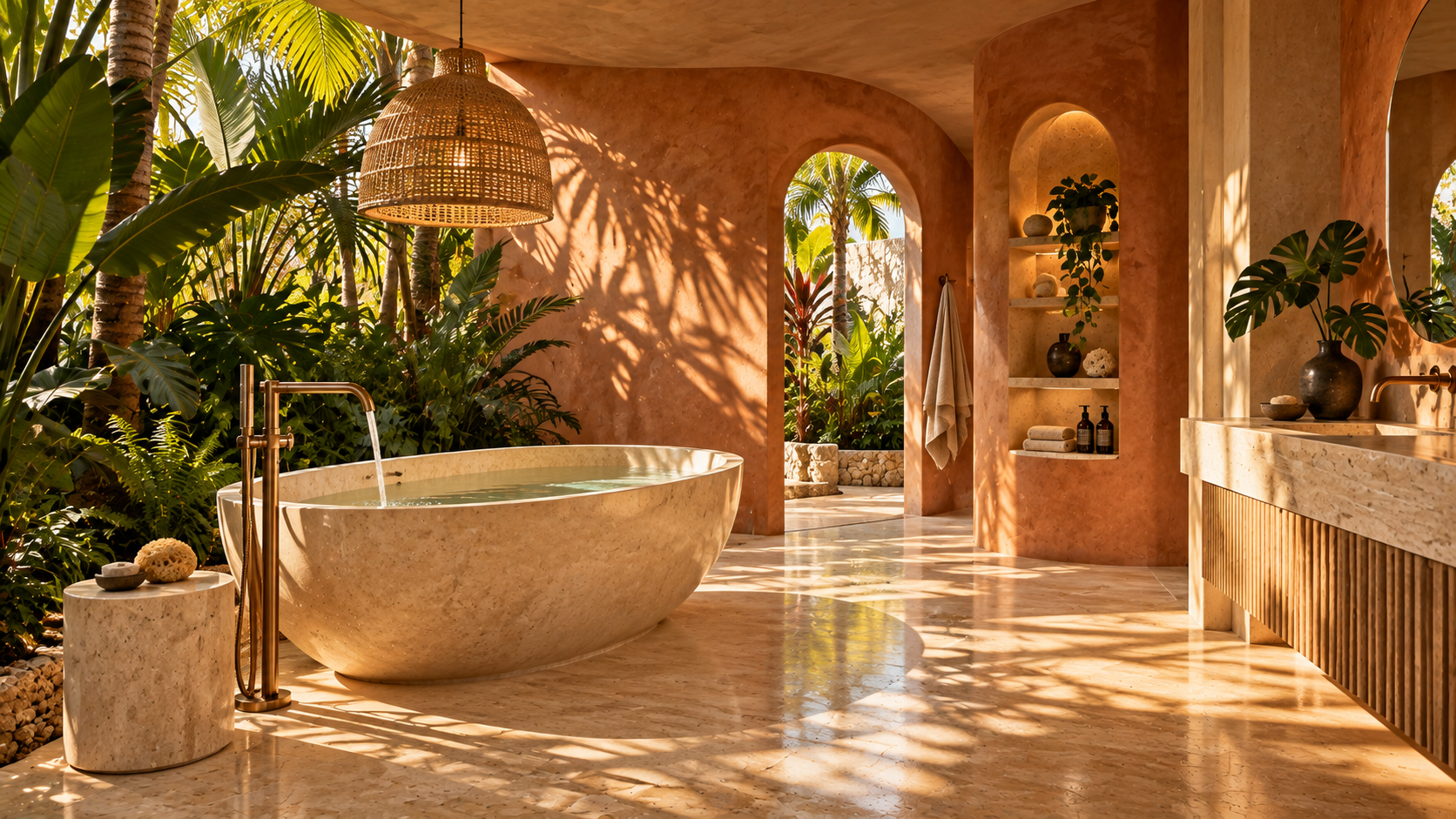
A soaking tub is a different kind of demand. Instead of a steady draw over a few minutes, you are asking for a large volume of hot water in one stretch, and the bath only feels good if it stays warm. Deep tubs hold a lot of water, and a tub that cools while you soak is a letdown no matter how beautiful it looks.
Several design choices help. The material of the tub affects how well it holds heat. A tub with a comfortable interior shape means you need less water to feel covered. A freestanding tub sits away from walls and loses heat in different ways than a tub set into an alcove. Our guides on soaking tubs and alcoves and freestanding tubs describe those differences.
The filler matters too. A tub filler that delivers water at a generous rate helps a deep bath fill while it is still hot. Ask your plumber what your home can supply to the tub at once and whether the heater you have is suited to the kind of bath you imagine. It is a short conversation that saves a lot of disappointment.
Understanding your water heater in plain terms
You do not need to become an expert in water heaters to plan a bathroom, but a few ideas help. A heater stores hot water in a tank or heats water as it flows. Tank types keep a supply ready and can run low if many fixtures draw at once. Flow through types heat on demand and do not run out in the same way, but they are limited by how much they can heat at a given moment.
Neither approach is better in every home. What matters is how your household uses water and how the equipment is sized and installed. Where the heater is located in relation to the bathroom matters too, because water travels through pipes before it reaches you, and a long run can mean waiting for warmth to arrive.
Your plumber can tell you what you have, what condition it is in, and whether it suits the plan. Any change to a heater, its location, its fuel, or its venting is a job for qualified professionals working to local requirements, and your city building department and, in a condo, your association will have a say. This guide is for planning conversations, not for deciding what to install.
Distance, waiting, and the feel of the first minute
Anyone who has stood at a shower waiting for warm water knows how irritating it can be. The delay comes from the length and size of the pipe between the heater and the fixture, and from how much cooled water sits in that pipe. A bathroom far from the heater makes this more noticeable.
If you are moving the bathroom or adding a second bathroom, this is worth discussing before walls are built. Sometimes a different layout, a shorter run, or a change in how the plumbing is routed makes a real difference to daily comfort. The page on moving plumbing fixtures explains why relocating a fixture has ripple effects.
Describe the first minute to your plumber. Tell them how long you wait now, whether it varies by time of day, and whether other bathrooms in the home behave the same way. This is the sort of observation that helps a professional suggest options, and it keeps the conversation grounded in your actual home instead of a general rule.
- How long do you wait for warm water at the current shower?
- Is the wait longer in the morning or when others have just used water?
- Do other bathrooms in the home behave the same way?
- Is the bathroom far from the water heater?
- Are you planning to move or add fixtures that will lengthen the run?
Shared households and busy mornings
The test of any hot water plan is a busy morning. When two people shower back to back, a dishwasher runs, and a washing machine starts, the system has to keep up. A bathroom remodel that adds outlets or a larger tub without any thought to this can make those mornings less pleasant, even though the room itself is much nicer.
Talk through your real routines with your remodeler. Who showers at what time? Do guests visit often? Does the bathroom serve a child who takes long baths? These details are more useful than any rule of thumb, and they help decide whether a design should be modest, generous, or split across two spaces.
It also helps to think about the season. In South Florida, many people shower with water that is only warm for much of the year and only want a long hot soak occasionally. Others want a strong hot shower every morning regardless of the weather. Your own habits matter more than any average, and telling your remodeler which describes you keeps the design from being built for someone else.
In some homes, the answer is to keep the main shower simple and put the luxury in a tub that is used at a calmer time of day. In others, it is to separate the primary bath from the guest bath so demand is spread out. Our page on primary bathrooms shows how a main suite is usually planned around these routines, with guest baths playing a lighter role.
Condos, townhomes, and shared systems
In a condo or townhome, the hot water setup may be very different from a single family house. Some units have their own heater in a closet. Others rely on building systems, and the rules about what you can change may be set by the association. A tub you dream of may be limited by the space, the heater, or the building.
Ask your association early what applies to plumbing and equipment changes, and what approvals or notices they need before work begins. Requirements vary by building and community, so do not assume that what a neighbor did is allowed for you. Our guide on condo bathroom remodeling and your association lists the questions worth asking.
If you live in a condo, also ask about the heater location and access. A closet that holds the heater may need to stay accessible for service. A plan that blocks it, even by accident, can cause trouble later. Good planning respects the equipment that keeps the unit running.
Logistics matter as well. In a multi unit building, shutting off water for plumbing work may affect neighbors, and the association may require notice or limit the hours when such work can happen. Our planning page on condo bathroom remodel logistics covers these practical points, from elevators and delivery windows to protecting shared hallways.
Efficient habits that complement good design
Design is only half the story. How you use the bathroom shapes hot water demand too. A comfortable, well designed shower often leads to shorter showers, simply because you are not fiddling with the temperature or standing in a drafty space. A handheld with a clear on and off button lets you pause the flow while you lather.
Insulating hot water pipes, where it is accessible and appropriate, and keeping the water heater in good condition are matters for your plumber, and they can help water stay warm longer on its way. Mention them when you talk about the project, and let the professional tell you what suits your home.
Small touches help the room feel warm without more hot water. A heated floor, a towel warmer, and a well placed fan all make a bathroom feel inviting at a modest level of water use. Look at our pages on heated bathroom floors and towel warmers and accessories for ideas that improve comfort without touching the hot water system.
Ventilation helps in a similar way. A bathroom that clears humidity properly feels more comfortable to step out into, and you spend less time chasing warmth with extra hot water. In our warm, humid climate, a fan that actually moves air matters for the health of the room as well, and our guide on ventilation and humidity in Florida bathrooms goes into detail on how to plan it.
Safety, temperature, and comfort at the valve
Hot water is also a safety topic. Very hot water can scald, especially children and older adults, and a shower valve that keeps temperature steady helps avoid sudden surprises. Your plumber can explain the options and the limits that may apply in your home.
If anyone in the household is sensitive to temperature changes, say so when planning. A valve with a stop that prevents the water from exceeding a chosen temperature, or a control placed where you can reach it before stepping into the spray, adds peace of mind. These are details that rarely appear in a catalog but make a daily difference.
Think also about the person standing in the shower rather than the person designing it. A control that is hard to reach, a handle that is slippery with soap, or a dial with unclear markings can turn a good shower into a nuisance. Ask to see and touch controls before you choose them, and consider how they will feel with wet hands. Comfort and safety at the valve are among the details that homeowners remember longest.
For homes where accessibility matters, our planning page on accessibility planning for bathrooms explains how reach, seating, and control placement fit into the wider design. This guide is not medical advice, only an invitation to think about comfort and safety as part of the plan.
Bringing it together before construction begins
The simplest way to apply all this is to write down how you want the new bathroom to feel in use. Describe the shower you imagine, the bath you want, who uses the room, and when. Then ask your remodeler to share this with your plumber, along with the fixtures you are considering.
From there, the plan can address a few practical questions. Can the existing heater support what you are adding? Is the run from the heater acceptable? Are there choices in the design that give you the feeling you want with less demand? Answers to these questions let you refine selections before construction begins, which is far easier than adjusting later.
This is general guidance for homeowners in South Florida and elsewhere. Your plumber, your city building department, and your association decide what is suitable and permitted in your case. When you are ready to talk through a larger project, our overview of complete bathroom remodeling shows how we approach the whole room.
One last habit worth building is to keep a short written list as the plan evolves. Note the fixtures you have chosen, the questions you still owe your plumber, and any answers you have received. Hot water is one of those topics that is easy to forget between meetings, and a list makes sure it comes back to the table at the right moment, before walls are closed and finishes are chosen. Calm, steady planning is what turns a remodel into a room you enjoy every day. If a question feels too technical, write it down anyway and let the right professional answer it.
Good to know
Common questions
Do I need a bigger water heater for a larger shower?
Not always. It depends on how many outlets you add, how long people shower, and what your current equipment can deliver. Ask your plumber to look at the heater and your household routine before you finalize the design, rather than guessing from the size of the shower alone.
Will a soaking tub run out of hot water?
It can, if the tub is deep and the heater is small or shared with other uses. The material of the tub, its shape, and the speed of the filler all affect how the bath feels. Discuss your tub choice with your plumber early so equipment and fixture are matched.
Why does it take so long for warm water to reach my bathroom?
Usually because water has to travel a long pipe run from the heater, pushing out the cooled water that sat in the line. A bathroom far from the heater feels this more. Tell your plumber how long you wait now so layout options can be considered.
Can I move my water heater during a remodel?
Sometimes, but it is a separate decision with its own requirements for space, venting, access, and permits that differ by city and building. In a condo, your association may also have rules. Treat it as a question for your plumber and the authorities, not an assumption.
Does a larger shower always use more hot water?
Often it does, because bigger spaces invite longer showers and extra outlets. A well planned enclosure that holds warmth and a spray that feels full at a modest flow can keep usage reasonable. Layout, glass, and fixtures all play a part.
What should I tell my remodeler about hot water?
Share who uses the bathroom, at what times, how long showers run, and how long you wait for warmth. Mention any big fixtures you want, like a deep tub. This helps the plan reflect real life and gives your plumber a clear picture to work from.
Your bathroom starts with a conversation