
Hollywood Bathroom Remodeling Hollywood and nearby cities
Porcelain Versus Natural Stone in Bathrooms
Porcelain and natural stone can look alike from across a room and behave very differently up close. This guide compares appearance, upkeep, sealing and moisture behavior for walls, floors and showers.
 Hollywood Bathroom Remodeling
Warm design. Clear planning.
Material comparison
Two materials, two personalities
Porcelain is a manufactured ceramic made from refined clay, fired at high heat until it becomes dense and hard. Natural stone is cut from the earth, as marble, travertine, limestone, slate, granite and others, and each piece carries the marks of how it formed. One is made to be consistent, the other is valued for being individual. That difference shapes almost everything else in this comparison.
Neither material is simply better. Porcelain suits people who want predictable performance and easy care, and it can imitate stone, wood and concrete convincingly. Natural stone suits people who value depth, variation and the sense of something genuinely quarried, and who accept a more attentive routine. The right choice depends on your household as much as your taste.
This guide is educational and general. Specific stones and specific porcelain products vary a great deal, so the real answers come from the product information and from a conversation with an installer who knows the material. Use what follows to decide which questions to ask, and which sample to bring home.
It also helps to separate two ideas people often blur together: how a material looks on day one and how it behaves on day one thousand. Showrooms are built around the first. Your bathroom is lived in during the second. A calm, practical conversation about the second often changes which sample ends up on the wall, and it is the conversation most worth having before a purchase is made.
How each material looks and ages
Porcelain has come a long way. Modern printing technology produces surfaces with convincing veining, grain and texture, and good porcelain can be hard to tell from marble or limestone at a glance. Because the pattern is printed, the variation across tiles is controlled, which can make a large surface look consistent and calm.
Natural stone has a depth that printing struggles to match. Light enters the surface of marble and scatters, giving it a glow. Each slab differs in color, vein and tone, so the finished surface has character that cannot be repeated. That variation is part of the appeal, but it also means you should look at several pieces, or at the actual slabs, before choosing.
Aging differs too. Porcelain tends to look the same for years because the color runs through or is protected by a hard surface. Natural stone develops patina. Some people love how it softens and deepens, while others see it as wear. Honed marble, for example, can show etching and rings over time, while a dense granite may look much the same for a very long while. Decide whether you welcome that story or want a surface that stays as installed.
Edges and thickness show differences too. Porcelain tile is manufactured to consistent thickness, with clean edges that sit neatly side by side. Stone can vary slightly in thickness and edge finish, which is part of its handmade quality but requires care in setting. Where a stone wall ends at a corner or an opening, a trim piece or a finished edge is usually needed, and it is worth seeing how that detail will look before you commit.
Moisture and absorption
Moisture behavior is a major dividing line. Porcelain is very dense and absorbs almost no water, which is why it is common in showers, wet floors and humid rooms. Water mostly stays on the surface until it is wiped away, and the tile itself is not a source of staining or swelling.
Natural stone is generally more porous, though the degree varies widely. Granite is dense, marble and limestone are more absorbent, and some stones such as travertine have natural holes that are filled during processing. Porous stone can absorb water, soap, oils and cleaning products, which can lead to stains or darker patches if the stone is not sealed and cared for.
In a South Florida bathroom, with long humid stretches, this matters. A stone shower needs proper waterproofing behind it, correct slope and a sealing routine, while porcelain relies mostly on the waterproofing system and the grout. Ask the stone supplier how the specific stone handles constant moisture, and read our page on shower waterproofing explained for the layers that sit behind either material.
- Porcelain absorbs almost no water, so it is widely used in wet areas.
- Stone varies from dense to quite porous depending on the type.
- Porous stone can stain or darken if not sealed and maintained.
- Both materials depend on a properly waterproofed shower beneath them.
- Ask for the specific absorption information of the exact product.
Sealing and what it asks of you
Most porcelain does not need sealing, though the grout between the tile may. This is a real convenience in a busy household. Wiping the surface and keeping an eye on the joints is the main routine, and the material itself rarely changes.
Natural stone usually benefits from a sealer, often applied after installation and reapplied from time to time as the product wears. A sealer slows absorption and gives you time to wipe up spills, but it does not make stone waterproof or stain proof. Different stones need different sealers, so use the product recommended for yours.
If sealing sounds like a chore you will not keep up with, be honest about it. Many beautiful stone bathrooms look tired because the owner never resealed. If you want stone and also want low upkeep, consider using it where it is least exposed, such as a vanity top or a feature wall outside the wet zone, and using porcelain in the shower. Our grout and sealer guide explains related upkeep.
Timing of sealing matters. Stone is typically cleaned and left to dry thoroughly before a sealer is applied, and grout between stone tiles is often sealed too. Doing this at the wrong moment, or with the wrong product, can leave the stone blotchy. Ask who will apply the sealer, when it will be done and what the first weeks of use should look like. A clear plan removes guesswork and protects the surface from the beginning.
Walls, floors and showers compared
On walls, both materials work. Porcelain panels or tiles give clean, durable surfaces, and stone adds a luxurious feel to a feature wall or a vanity backsplash. Outside the shower, walls face less water, so stone is more forgiving there and care needs are lighter.
On floors, traction and wear matter. Porcelain comes with textured finishes designed for wet areas, which makes it a common floor choice. Polished stone can be slippery when wet, so honed or textured finishes are better suited to floors. Softer stones can scratch or wear, and some can be etched by acidic cleaners.
In showers, the demands are greatest. Porcelain handles constant water well, and its grout joints are the main place to focus care. Stone in a shower is certainly possible and many people love it, but it asks for more attention to sealing, cleaning products and waterproofing. If you want a stone shower, bring the idea up early so the plan can account for it. Our custom showers page describes how those decisions are made.
Shower floors raise their own question. Stone mosaics on a shower floor can feel wonderful underfoot and look natural, but each small piece and each grout joint is a place where water and soap can settle. Porcelain mosaics offer similar grip with less absorption. If you are drawn to stone underfoot, talk through the sealing routine and the grout type that suits it, and decide honestly whether you will maintain the surface through humid summers.
Cleaning and everyday care
Porcelain is simple to clean. A mild cleaner, a soft cloth or brush and regular wiping are usually enough, and it tolerates a wider range of household products. Even so, choose cleaners wisely, since harsh products can damage grout and wear sealers.
Natural stone needs more caution. Acidic cleaners, including some bathroom products and even vinegar, can etch marble and other calcium based stones, leaving dull spots. Abrasive pads can scratch softer surfaces. Stone care products designed for your stone are generally the safer route, and testing in an inconspicuous spot is wise.
Hard water is a shared challenge. Mineral deposits can build up on any surface that stays wet, and removing them without damaging the finish depends on the material. Read about hard water spots and buildup to understand what to observe and what to tell a remodeler. A squeegee after showers helps both materials.
Do not forget the fixtures and glass. Soap, shampoo and bath products can leave residue on any surface, and some products contain oils or dyes that can mark porous stone. Keeping bottles on a shelf or in a niche that is lined with a dense material, rather than directly on a porous stone ledge, reduces ring marks. Small habits like this protect the surface far more than any single cleaning product can.
Heat, light and the South Florida setting
Warm, bright conditions affect how materials feel and look. A bathroom with a sunny window will show a polished surface differently in the morning and the afternoon, and glare can make some glossy finishes uncomfortable. Honed and textured finishes tend to soften light, which many people prefer in a room where they begin and end the day.
Stone has a thermal quality worth noticing. It often feels cool underfoot, which is welcome in a warm climate and less so on a winter morning. Porcelain feels similar. If underfloor warmth appeals to you, our page on heated bathroom floors explains how heat and tile can work together, and both materials can be paired with it if the system is planned in advance.
Salt air near the coast and constant humidity influence what you notice over time. Metal accessories can spot, grout can darken and untreated stone can pick up stains from damp surroundings. None of this rules out either material. It simply means a plan that includes ventilation, sealing where needed and a cleaning routine will serve you better than one based on appearance alone. Ask your installer how each option has held up in damp conditions.
Cutting, installing and the work behind it
Porcelain is hard and dense, which is part of its durability, and it requires proper tools and technique to cut and drill. Large porcelain panels are especially demanding. Installers who work with porcelain regularly know how to handle weight, flatness and edges.
Stone has its own demands. Slabs and tiles can vary in thickness, may require careful matching of veining and are often more fragile at the edges. Some stones need particular setting materials to avoid staining from below. A stone installer plans the layout around veining and tone, so the finished wall reads as intended.
Either way, the work beneath is just as important. Flat walls, solid substrate, correct slope, proper waterproofing and good ventilation protect the investment in any surface. Our tile installation page describes how layout and setting come together, and the bathroom tile sizes and layouts guide explains how size interacts with both materials.
Mixing the two materials in one bathroom
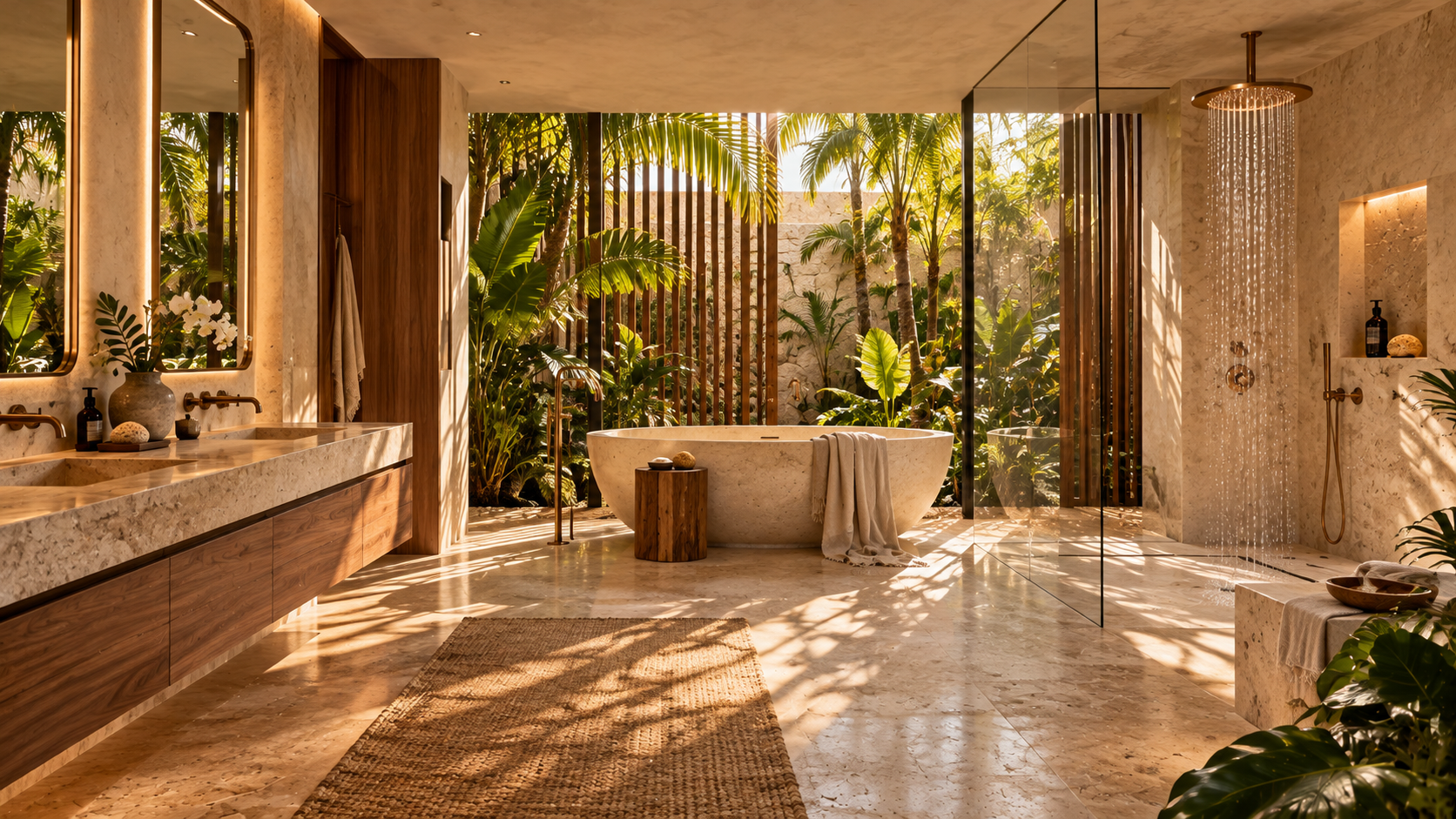
You do not have to choose one material for the whole room. A common approach is to use porcelain in the wet areas and stone in the drier ones. A stone vanity top, a stone threshold or a marble look accent wall can bring warmth, while a porcelain shower floor and walls provide easy, dependable performance.
Matching is the challenge. Stone and porcelain that imitate stone may not match exactly in color or finish, and mismatches can look accidental. Hold samples side by side in the room, in daylight and by lamplight, and decide whether you want them to blend or to contrast clearly. A confident contrast can look better than a near match.
Scale and proportion help here. If stone appears only as a small accent, such as a shelf, a niche ledge or a vanity top, it can be a jewel in an otherwise practical room. If stone covers every surface, upkeep multiplies and the room can feel heavy. A balanced plan lets each material do the job it suits most, with the durable one taking the harder work and the beautiful one taking a more visible, protected role. That division of labor is how many thoughtful designers approach a bathroom, and it works for ordinary homes just as well as for grand ones.
Think about transitions as well. Where stone meets porcelain, in a threshold or between floor and wall, edges need to be finished in a way that looks intentional and protects the material. Our page on bathroom tile edges and trim shows options. Ask for a mockup or a small sample board that places the two materials together with the grout color you plan to use. Seeing the combination in the actual light of the room removes much of the uncertainty and often settles a debate that photographs could not.
Choosing for your household
Ask yourself a few honest questions. Who uses this bathroom, and how rough are they on it? Do you enjoy caring for a surface, or do you want it to take care of itself? Will the room get a lot of water, or is it a guest bath used occasionally? How long do you plan to stay in the home?
A busy family bathroom often points toward porcelain, with stone used sparingly. A primary suite with a person who loves materials and is willing to maintain them can carry more stone. Households with young children, pets or frequent guests may prefer to simplify, since spills, splashes and enthusiastic cleaning products are part of daily life. Planning for the way the room is really used, not for a photograph, is the surest way to end up satisfied. A guest bath or powder room, which sees little water, is a lovely place for a stone statement.
Whatever you pick, look at samples in the room. Wet them, set them against the vanity and the fixtures, and live with them for a few days. When you want to talk about your own bathroom, use the call button on this page, or read choosing tile for a Florida bathroom for more planning ideas.
Good to know
Common questions
Is porcelain always better in a shower?
Porcelain is dense and absorbs almost no water, so it is a dependable choice for wet areas. Stone can be used in a shower with the right waterproofing, sealing and care. Which is better depends on how much upkeep you accept and the look you want.
Does natural stone need to be sealed?
Most porous stones benefit from a sealer, which slows absorption and gives you time to wipe up spills. It is not a permanent coating, and it does not make stone waterproof. Different stones need different products, so use the sealer recommended for your specific stone.
Can porcelain really look like marble?
Yes. Modern printing produces convincing veining and texture, and good porcelain can be hard to distinguish from stone at a glance. Natural stone has a depth and variation that is difficult to replicate, so compare samples in your own light before deciding.
Is polished stone safe for bathroom floors?
Polished surfaces can be slippery when wet, so honed or textured finishes are usually better for floors. Porcelain is also made in textured finishes intended for wet areas. Consider your household, and ask about the traction of the exact product you are considering.
What cleaners should I avoid on stone?
Acidic products, including some bathroom cleaners and household items like vinegar, can etch marble and other calcium based stones. Abrasive pads can scratch softer surfaces. Use cleaners made for your stone and test a hidden spot before cleaning a whole surface.
Can I combine porcelain and natural stone?
Absolutely. Many bathrooms use porcelain in showers and floors and stone on vanity tops or accent walls. The challenge is matching tone and finish, so compare samples side by side, and plan transitions between materials so edges look finished and intentional.
Your bathroom starts with a conversation